
Why Is Web Design Important? What It Really Does for Your Website

You land on a website looking for one simple answer. Three seconds in, you can’t tell what the company does, the menu hides behind a tiny icon, and a pop-up covers the only sentence you wanted. You tap back and move on. That quiet exit is what many business owners are really asking about when they wonder why is web design important if their product or service is already good.
- What Web Design Actually Covers (More Than Looks)
- It Shapes First Impressions in Seconds
- Good Design Makes Your Site Easier to Use
- It Builds Trust Before You Say a Word
- Mobile and Speed: Where Design Meets Performance
- How Design Supports Your SEO (Without Gaming It)
- Design Guides People Toward Action
- It Keeps Your Brand Consistent
- Accessibility: The Part Most Sites Skip
- What Poor Web Design Costs You
- A Quick Self-Audit Checklist for Your Own Site
- Final Thoughts
- FAQs
The truth is that design decides whether a visitor stays, trusts what they see, and takes the next step. At LocalPro1, we treat the importance of web design as a business question first and a visual one second.
Quick answer: Web design matters because it controls how quickly people judge your credibility, how easily they find what they came for, and how likely they are to call, book, or buy. A clear layout, readable text, fast pages, and a site that works properly on a phone all say the same thing: this business is real and pays attention to detail. Leave those out and visitors quietly go to someone who didn’t. The main web design benefits sit in six areas: first impressions, usability, mobile performance, search visibility, conversions, and brand consistency. Below, we go through each one with practical examples, plus a checklist you can use on your own site today.
What Web Design Actually Covers (More Than Looks)
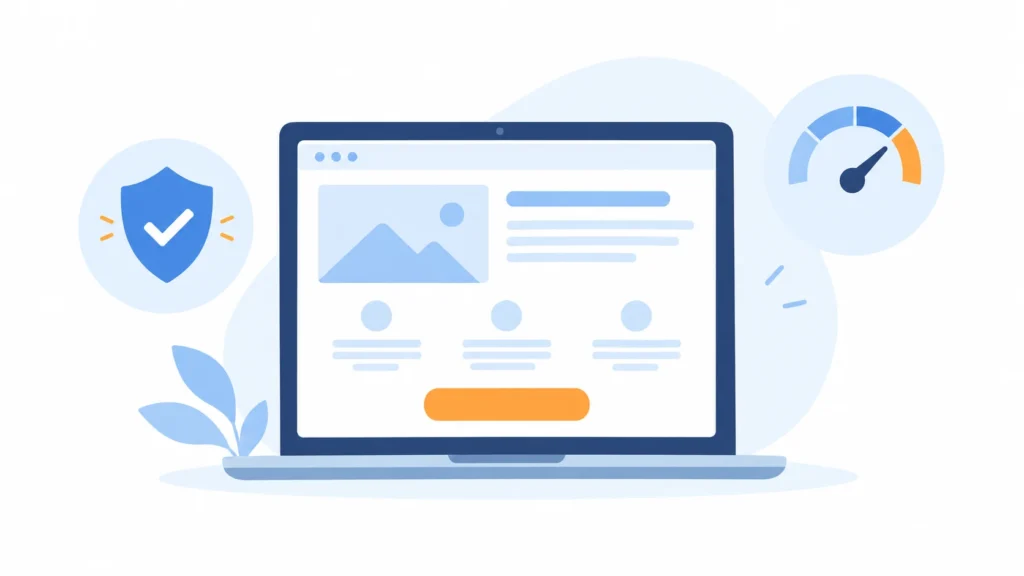
The meaning of web designing goes well beyond colors and nice photography. It is the planning of how a site looks, reads, loads, and behaves. That includes layout, typography, color, navigation, speed, mobile behavior, and accessibility.
It also helps to separate design from development. Design decides what visitors see and what they are guided to do. Development builds the code that makes it work. A site can be technically flawless and still confusing, and that gap is where most real-world problems live.
It Shapes First Impressions in Seconds
People judge quickly. Research on first impressions points to a fraction of a second, and one widely cited study puts it at around 50 milliseconds. You don’t need to memorize the number. The point is that visitors form an opinion before they read a single word, so spacing, layout, and clarity speak first.
Picture two homepages for a local plumbing company. The first has a rotating banner, six different fonts, three paragraphs of company history, and a phone number buried in the footer. The second opens with one plain line about emergency plumbing in your area, a photo of a real technician, and a large call button. The skills behind both companies are identical. A homeowner with a leaking pipe at nine in the evening will only trust one of them.
A good test is to answer three questions within the first five seconds of any page:
- What is this?
- Is it for me?
- What should I do next?
If a stranger can’t answer all three without scrolling or guessing, the design still has work to do.
Good Design Makes Your Site Easier to Use
Usability is mostly about removing small frictions. Clear navigation, a sensible content order, readable text, and obvious buttons all help someone get what they came for without thinking about the interface.
This is why web design matters most on pages where people are in a hurry, such as a menu, a booking page, or a price list. A restaurant that publishes its menu as a heavy PDF forces phone users to pinch, zoom, and wait. A dental clinic that hides its booking link three clicks deep loses people who were ready to book.
Usability mistakes worth fixing today
- Tiny text: Keep body text comfortably readable on a phone, around 16 pixels or larger.
- Hidden menus: Label the mobile menu clearly and keep the main links short.
- Too many pop-ups: Use one at most, delay it, and make it easy to close.
- Confusing forms: Ask only for what you truly need and label every field.
It Builds Trust Before You Say a Word
The importance of website design in building trust is easy to underestimate, because good trust signals are almost invisible. Nobody applauds a working padlock icon or a consistent color palette, but they notice when those things are missing.
The signals that matter most are simple: consistent branding, real photos instead of generic stock images, visible contact details, clear policies, and a secure connection. Small neglect also adds up. A copyright year from several years ago, broken images, or dead links tell visitors that nobody is watching the shop.
One honest note, though. Design opens the door, but it can’t close the sale alone. A polished site with vague claims, no reviews, and unclear pricing still won’t convince a careful buyer. Content and social proof have to carry their share.
Mobile and Speed: Where Design Meets Performance
In most regions, the majority of web visits now happen on phones. Responsive layout is no longer a bonus feature. It is the main version of your site for a large share of visitors.
Think about an electrician’s website built mainly on a desktop screen. The phone number looks fine on a monitor but turns into tiny text on a phone, and tapping it does nothing. Someone standing in a dark hallway with a tripped breaker won’t copy and paste a number. They’ll call the next result.
Speed and stability matter just as much. Heavy images and bulky scripts slow pages down, and layout shifts, where a button jumps just as you tap it, are especially irritating. Many teams aim for pages that load in roughly three seconds or less on a normal mobile connection.
Quick wins you can do this week
- Compress and resize images before uploading them.
- Remove plugins and scripts you no longer use.
- Replace autoplay video in the top section with a still image.
- Make buttons and links large enough to tap with a thumb.
- Test the site on a real mid-range phone using mobile data, not just office Wi-Fi.
How Design Supports Your SEO (Without Gaming It)
Design is not a ranking trick, and anyone promising guaranteed positions through layout changes is overselling. If you’re asking why is web design important for search visibility, the honest answer is that it removes obstacles instead of adding shortcuts.
Search engines want to show pages that help people. A site with a logical heading structure, crawlable menu links, useful internal links, quick loading, and a layout that works on phones makes that job easier. Those same choices also make visitors happier, which is the real goal.
The other side matters too. Search engines have run several spam updates this year, and tactics like hiding text, stuffing keywords into footers, or building near-identical pages are exactly what those systems exist to catch. Design for the person reading, and keep your structure clean and honest.
Design Guides People Toward Action
Every page should have a job. Good design makes that job obvious through a clear call to action, a short path, and a form that doesn’t feel like paperwork.
Consider an accounting firm whose contact form asks for nine things: company size, budget, current software, preferred contact method, and more. Most visitors give up halfway. Trim it to name, email, a short message, and a preferred call time, and the form feels like a conversation instead of an interrogation. Fewer fields usually reduce friction, though results depend on the audience and the offer, so treat any percentage you read online as a guess, not a promise.
Wording matters as well. A button that says “Get a free quote” tells people what happens next. A button that says “Submit” tells them nothing. These web design benefits show up in enquiries and bookings, not just in compliments.
It Keeps Your Brand Consistent
Colors, fonts, tone of voice, and image style should feel the same on every page. When a service page looks like it belongs to a different company than the homepage, visitors notice, even if they can’t say why. Part of the importance of website design is that consistency makes you recognizable, and recognition makes you feel dependable.
Accessibility: The Part Most Sites Skip
Accessible design means people with different abilities can use your site. That includes strong color contrast, alt text on meaningful images, full keyboard navigation, visible focus states, readable fonts, and captions on video.
The benefits reach far beyond a small group. An older customer, someone reading in bright sunlight, a person using one hand, or someone with a temporary injury all gain from the same choices. This is another place why web design matters beyond looks: accessible sites are simply easier for everyone, and they are rarely discussed in the average article on this topic.
What Poor Web Design Costs You
Bad design rarely fails loudly. It leaks. Visitors bounce without telling you, enquiries never arrive, and paid ads send traffic to pages that confuse people. Credibility drops quietly, and you never see the sales that didn’t happen.
Watch for these warning signs:
- Pages that load slowly, especially on phones
- Text that is too small to read comfortably
- A menu people can’t figure out
- A look that feels years out of date
- Broken links or missing images
That is the importance of web design in practical terms: it protects the money you already spend on marketing, referrals, and reputation.
A Quick Self-Audit Checklist for Your Own Site
LocalPro1 suggests running this audit on your phone first, since that’s where most visitors will meet you. Give each item a simple yes or no:
- Can a new visitor tell what you offer within five seconds?
- Is your main call to action visible without scrolling?
- Can you read all the text without zooming?
- Does the page load quickly on mobile data?
- Can you tap your phone number and email directly?
- Is your contact information easy to find?
- Do your colors and fonts match across pages?
- Are there any broken links, blurry images, or outdated dates?
- Can you move through the site using only a keyboard?
If three or more answers are no, it may be time for a professional review. A Web Design Company in NewYork can walk through these points with you and turn them into a clear action plan.
Final Thoughts
Once you see why web design matters, it stops looking like a cosmetic expense and starts looking like part of how your business works. Clear design helps people trust you, find what they need, and take action without friction. It also protects the effort you put into marketing and word of mouth.
You don’t need to fix everything at once. Start with one visible problem, like a slow page, a confusing menu, or a weak call to action, and improve it this week. If you’d like a professional opinion, LocalPro1 is happy to help, so contact us and we’ll look at your site together.
FAQs
What is the meaning of web designing?
Web designing is the process of planning how a website looks, reads, and behaves. It covers layout, typography, color, navigation, speed, and accessibility. The goal is to make the site clear and easy to use for the people visiting it.
Why is web design important for small businesses?
A small business often has only a few seconds to prove it is credible and worth contacting. Good design makes the offer clear, builds trust, and makes calling or booking easy, which matters even more when you don’t have a big marketing budget.
Does web design affect SEO?
Design supports SEO indirectly. Clean structure, fast pages, mobile-friendly layouts, and logical headings make it easier for search engines to understand your content and for visitors to stay on it. It does not guarantee rankings on its own.
How often should a website be redesigned?
There is no fixed schedule. A full redesign usually makes sense when the site looks dated, performs poorly on phones, or no longer matches your services. Smaller improvements every few months, such as fixing slow pages or tightening forms, often matter more than a rare complete overhaul.
Are web design benefits the same for every business?
Not exactly. A local service company may gain the most from click-to-call buttons and fast mobile pages, while an online store may benefit more from clear product pages and simple checkout steps. The core principles stay the same, but the priorities depend on your audience and goals.
Ready to Grow Your Business Online?
Get a custom strategy built around your goals. Our team will review your current marketing and show you exactly where the growth opportunities are.
- Free 30-minute strategy call
- Custom growth roadmap
- No obligation or hidden fees