You have undoubtedly been on a website, concluded it sucked within a couple of seconds, and clicked away without reading a single word. That’s not a mistake. That’s design at work, or, in this case, not at work. And that’s why web design is so vital for any business that wants to keep people around long enough to buy something.
Your website design really does matter since it impacts how visitors see your business, whether they trust you and if they take action on your site. Here’s the simple answer before we go any deeper: In this article I’ll walk you through what web design really means, what happens when businesses disregard it, the true benefits of getting it right, the parts of a great site, and how to choose the appropriate person to construct yours.
What Is Web Design
Web design is the process of planning, designing and arranging content for the web to provide a user experience that is easy to use. It considers visual aspects like layout, typography, and colour schemes, as well as technical features including page speed and mobile compatibility.
Web designing is not just about making a page attractive. It’s the art and science of structuring information so individuals can discover solutions without getting annoyed. You might think of it as building a house. The blueprint shows you where the rooms go, and the interior decorating makes it comfy to live in.
Why Web Design Matters for Your Business
When someone lands on your site, they form an opinion in less than 50 milliseconds. That split second determines if they trust you or hit the back button. Here are the primary reasons why web design matters so much in today’s digital marketplace:
First Impressions Build Instant Credibility
Your layout is often the first interaction a prospective client has with your brand. Clear headers, clean spacing, and modern styling tell visitors you care about quality. An outdated or cluttered look makes people question your professionalism.
It Drives Search Engine Optimization
Search engines like Google evaluate how visitors interact with your pages. Layout directly impacts technical metrics such as:
- Core Web Vitals: Measures loading performance, visual stability, and interactivity.
- Mobile-First Indexing: Google uses the mobile version of your layout for ranking.
- Bounce Rate: Poor structure causes users to leave quickly, signaling to search engines that your page isn’t helpful.
It Sets the Standard for Customer Service
Think of your digital interface as a virtual staff member. If your site is dark, confusing, or cold, visitors feel unwelcome. An open, bright layout with simple navigation makes visitors feel valued from the moment they arrive.
Site navigation plays a bigger role here than most business owners realize. If a visitor can’t find your contact page or pricing within a few clicks, they leave. Not because they don’t want what you offer, but because you made it too hard to get to.
What Happens When Web Design Is Ignored
They ignore web design and end up with a greater bounce rate, lower search rankings, reduced brand credibility and fewer conversions. Visitors leave faster, and search engines give the site a lower rank because of poor usability signals, and the firm loses the potential clients that never had a real look at the product or service.
A badly designed site communicates a subtle message. This firm hasn’t kept up. If your website is old or confused, customers won’t believe anything else you tell them, even if you have a great product. It’s like going to a client meeting in wrinkled clothes. “The work could be fantastic but the impression is already spoiled.
There is an accumulative cost too. Every visitor that bounces due to bad design is a visitor you probably paid for, through ads, SEO, or recommendations. Wasted spend when it lets the site down. Bad design costs trust. It costs money. Money that has already left your bank account.
Search engines do as well. Google considers page performance, mobile friendliness and how long visitors remain before they leave. Sites that don’t follow basic design principles will rank lower, meaning fewer visitors will find them in the first place.
Benefits of Professional Web Design
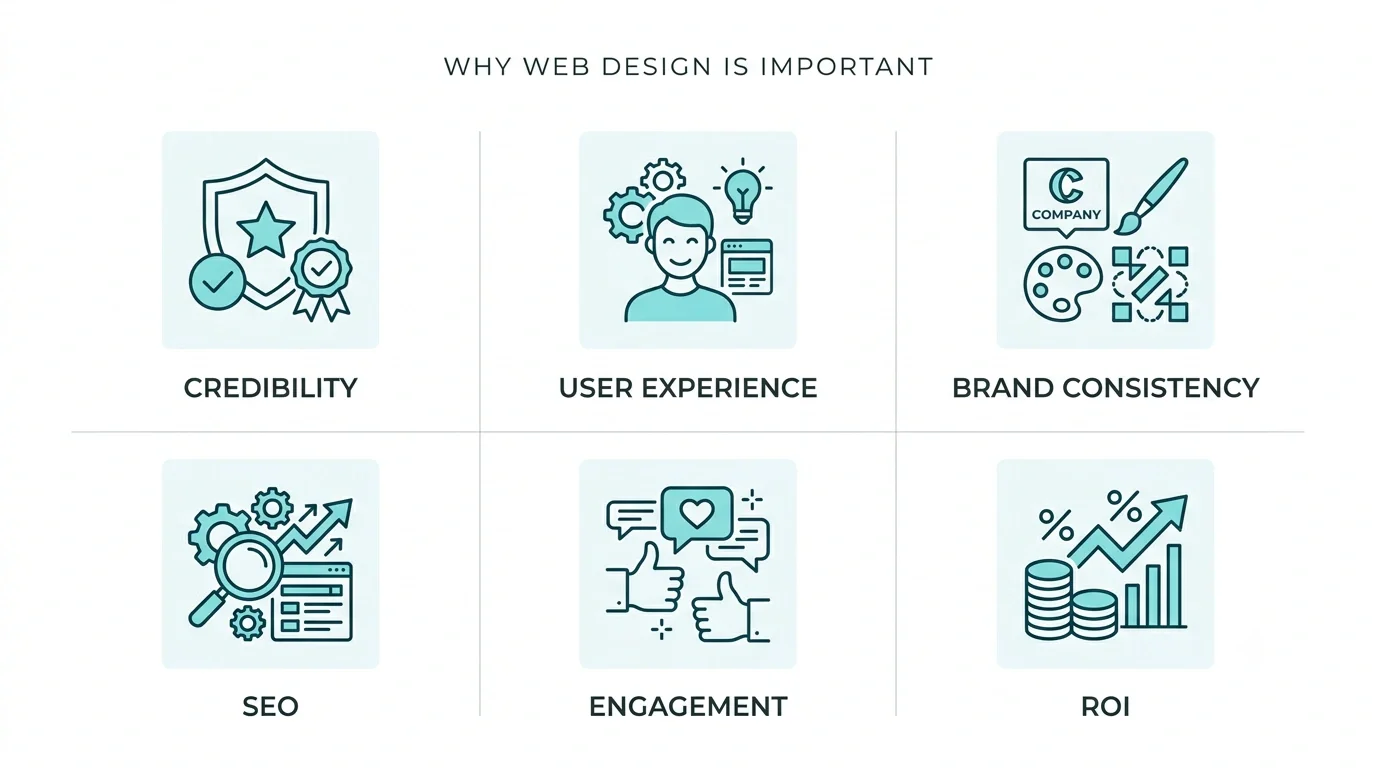
If you’re still wondering why is web design important once you get past first impressions, the answer sits in a handful of specific, measurable benefits. Here’s what a well-built site actually does for a business.
Builds Website Credibility
A clean, current design signals that a business is active and professional. Visitors associate polished design with reliability, the same way a tidy storefront suggests a well-run shop. Sloppy design suggests the opposite, whether or not that’s fair.
Improves User Experience and Usability
Website usability means visitors find what they need without friction. Clear menus, logical page flow, and fast load times keep people engaged instead of frustrated. A frustrated visitor doesn’t file a complaint, they just leave.
Strengthens Brand Consistency
Your site should look and feel like your brand everywhere else, your logo, your social media, your business cards. It develops recognition through consistency of colors, fonts and tone throughout every touchpoint. Mismatch branding makes a business look unorganized, even if the work below is strong.
Supports SEO Performance
Google rewards sites with strong technical design, fast load speed, mobile responsiveness, and clear structure. These aren’t separate from design, they’re part of it. A site built with SEO in mind from the start tends to rank better than one retrofitted later.
Increases User Engagement
Interactive elements, clear visual hierarchy, and intuitive layout keep visitors on the page longer. The longer someone stays, the more likely they are to explore your services, read your content, or reach out. Engagement isn’t about flashy animations, it’s about making the next step obvious.
Drives Website ROI
A site designed to guide visitors toward a specific action, whether that’s a purchase, a call, or a form submission, converts better than one that’s just visually pleasing. Design paired with a clear path to action is what turns traffic into revenue. That’s the actual return on your website investment.
Core Elements of Professional Web Design
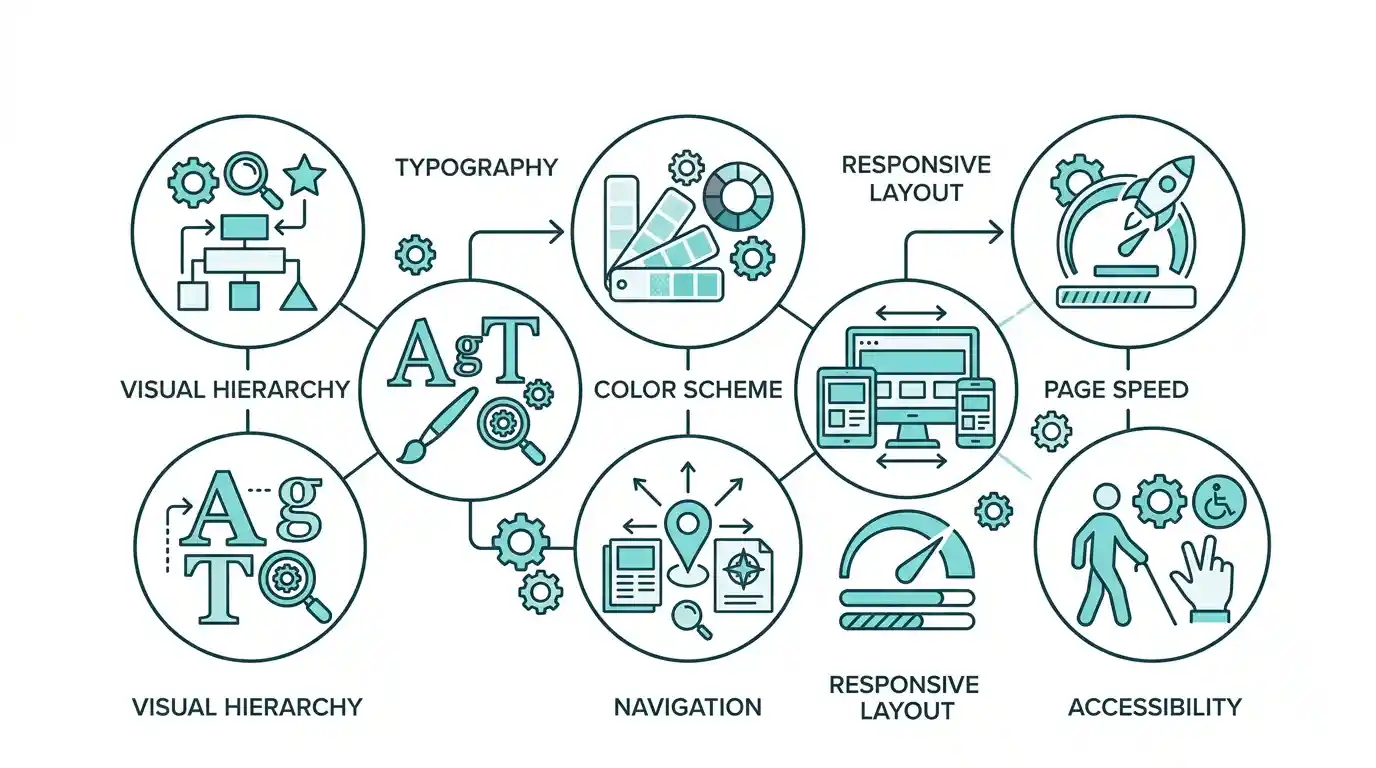
To build an effective digital presence, several technical and visual components must work together seamlessly.
1. Visual Hierarchy and Layout
Visual hierarchy refers to arranging elements so readers naturally notice the most important information first. Larger headlines, contrasting colors, and strategic white space guide the reader’s eye down the page naturally.
2. Intuitive Site Navigation
Site navigation should be predictable. Place your main menu at the top of the page, keep category names straightforward, and include a search bar for larger sites.
3. Mobile Responsiveness
Over 60% of web traffic comes from phones. A responsive layout adjusts smoothly across mobile screens, tablets, and desktop monitors.
4. Fast Page Load Speed
Compressing images and minimizing heavy scripts keeps load times under two seconds. A one-second delay can drop conversions by up to 7%.
How to Choose the Right Web Design Professional
Choose a web design professional by reviewing their portfolio, checking client reviews, asking about their design process, and confirming they build with SEO and mobile responsiveness in mind. A good designer will ask about your business goals before showing you templates.
Start with their past work. A portfolio tells you more than a sales pitch ever will. Look for sites that load fast, feel current, and match the tone of the businesses they were built for.
Ask how they handle revisions, timelines, and post-launch support. A site isn’t finished the day it goes live. It needs updates, security patches, and occasional redesigns as your business grows. A designer who disappears after launch leaves you stuck when something breaks.
Price matters, but it shouldn’t be the only factor. A cheap site that doesn’t convert or rank costs more in lost business than a properly built one that does its job. If you’re weighing options for WEBSITE DESIGNING Services, look for a team like Local Pro 1 that treats design as a business tool, not just a visual project.
Web Design vs. Web Development: What’s the Difference?
Web design focuses on the visual look, feel, and user experience of a site, while web development handles the underlying code that makes those elements function. Design covers aesthetics and layout, whereas development builds the functional engine behind the scenes.
| Feature | Web Design | Web Development |
| Primary Focus | Look, feel, UX, and visual hierarchy | Functionality, database integration, code |
| Tools Used | Figma, Adobe XD, Photoshop, Canva | HTML, CSS, JavaScript, PHP, Python |
| Core Goal | Engagement, trust, and smooth navigation | Security, speed, and platform performance |
| Outcome | User-friendly page interfaces | Smoothly functioning site infrastructure |
How Much Does Professional Web Design Cost?
Professional web design typically costs between $2,500 and $25,000 depending on the site’s Professional web design costs typically range from $2,500 to $10,000 for small business sites, while complex custom builds can range from $10,000 to $50,000+ depending on features. Pricing depends heavily on custom graphic needs, overall page count, and advanced functionality.
| Level | Estimated Cost | Ideal For |
| Basic Template Setup | $1,000 – $3,000 | Early-stage projects needing a simple online card |
| Custom Small Business | $3,000 – $10,000 | Established local businesses seeking lead generation |
| Advanced Corporate / E-Comm | $10,000 – $30,000+ | Large companies requiring custom portal features |
While template tools seem budget-friendly up front, a custom web design delivers long-term flexibility, faster load speeds, and higher conversion rates.
Final Thoughts
By now the case for why is web design important should feel less like theory and more like common sense. A website isn’t just a digital business card anymore. It’s often the first, and sometimes only, interaction a potential customer has with your business before deciding whether to reach out. Good design doesn’t guarantee success, but bad design almost guarantees lost opportunities.
If your current site feels outdated, slow, or hard to navigate, it might be costing you more than you realize. Contact us at Local Pro 1 to talk through what a redesign could look like for your business.
Frequently Asked Questions
Is web design still important with AI website builders available?
Yes. AI builders speed up the setup process, but they still rely on design principles to produce a usable result. A business with specific branding or conversion goals often needs custom adjustments an AI template can’t fully deliver on its own.
How long does a website redesign take?
Most redesigns take four to twelve weeks, depending on the number of pages, content readiness, and how many rounds of revisions are needed. Larger sites with custom functionality can take longer.
Does web design affect SEO rankings?
Yes. Page speed, mobile responsiveness, and site structure are all factors search engines use to rank pages. A well-designed site tends to perform better in search results than a poorly built one, even with similar content.
Can I redesign my website without losing my current SEO rankings?
Yes, if it’s done carefully. Keeping URL structures consistent, setting up proper redirects, and preserving existing content during a redesign helps protect rankings that took time to build.