What Is Semantic SEO? A Practical Guide for Ranking in 2026
Keyword stuffing died years ago, yet plenty of websites still write for algorithms instead of people. Google’s ranking systems now read for meaning, context, and intent rather than counting how many times a phrase appears on a page. If you’ve been asking what is semantic seo and why it keeps coming up in every SEO conversation this year, the short answer is this: it’s the practice of structuring and writing content around topics, entities, and user intent rather than isolated keywords.
At LocalPro1, we’ve watched this shift change what actually earns visibility in search, and this guide breaks down exactly how it works and how to apply it.
What Is Semantic SEO? (Core Definition)
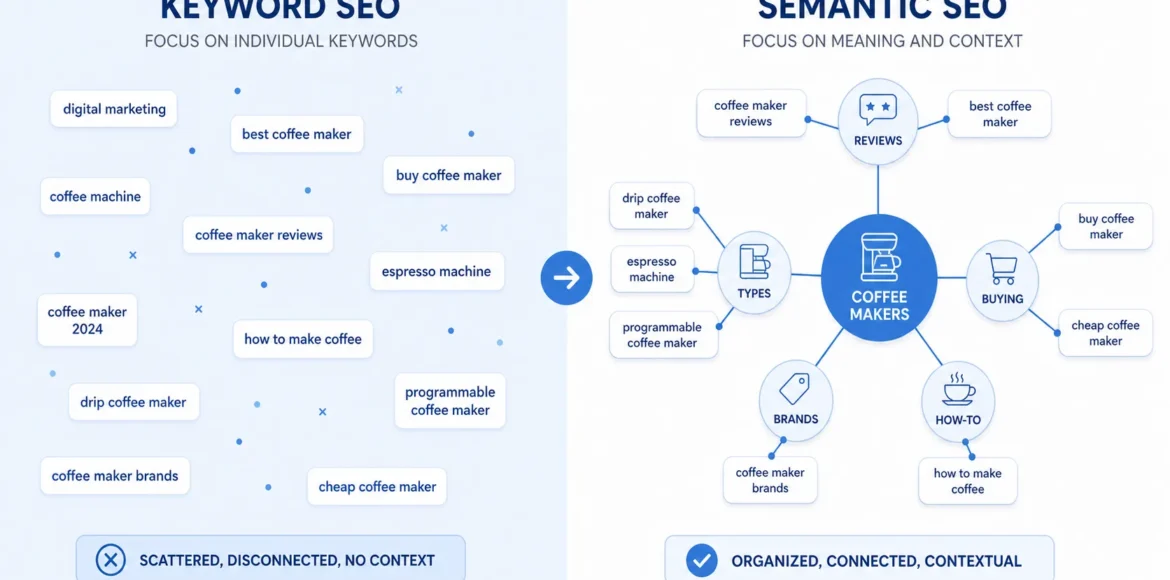
Semantic SEO is the process of optimizing content so search engines understand its full context and meaning, not just the words it contains. Instead of targeting a single keyword, you build content around a topic and everything a user genuinely needs to understand it, including related questions, entities, and subtopics.
Traditional keyword-based SEO treated each page as a match for one phrase, repeating it enough times to signal relevance. Semantic SEO works differently. It asks whether the page actually answers the searcher’s question thoroughly enough that no follow-up search is needed, which is exactly the approach our Semantic SEO Services in New York are built around.
This is where semantic analysis comes in. It’s the technical process search engines use to interpret relationships between words, phrases, and entities on a page, allowing Google to understand that “apple” means something different in a sentence about orchards versus smartphones. Content structured with clear context around such terms faces far less risk of misinterpretation.
How Semantic SEO Actually Works Behind the Scenes
To understand semantic SEO, it helps to understand what’s happening on Google’s end.
- The Knowledge Graph and entities. Google maintains a database of real-world entities such as people, places, organizations, and concepts, along with the relationships between them. When your content clearly identifies these entities and connects them logically, it becomes easier for Google to place your page within that broader knowledge structure.
- Natural language understanding. Google’s language models don’t just scan for keywords; they parse sentence structure, word relationships, and surrounding context to determine what a page is actually about. This is the core mechanism behind seo semantic analysis, where search systems evaluate not just what words appear on a page, but how those words relate to each other and to the searcher’s underlying question.
- Search intent interpretation. Every query carries an intent, whether informational, navigational, commercial, or transactional. Semantic systems try to match content to that intent rather than to the literal query text, which is why a page can rank for hundreds of related phrases it never explicitly targeted.
Why Semantic SEO Matters More in 2026
Two shifts have made semantic SEO less optional and more essential this year.
First, AI-generated answers and AI Overviews now sit above traditional results for many queries. These systems pull from pages that clearly explain a concept in a structured, extractable way. Thin or vague content rarely gets pulled into these summaries because there’s nothing precise enough to lift.
Second, search behavior has shifted toward longer, conversational queries. People type full questions instead of two or three word phrases, and they expect an answer that reads like it was written by someone who actually understands the subject. Content built around a single keyword can’t satisfy that kind of query. Content built around a topic, with proper semantic analysis seo woven throughout, generally can.
There’s also a practical enforcement side to this. Google’s recent spam updates, including the one that rolled out in August 2026, specifically targeted scaled content abuse and thin, mass-produced pages, many of which were generated with little editorial oversight. Sites relying on shallow, keyword-repetitive content saw measurable ranking instability during that period. Depth and genuine expertise aren’t just best practice anymore; they’re a defense against getting caught in these enforcement waves.
Core Pillars of a Semantic SEO Strategy
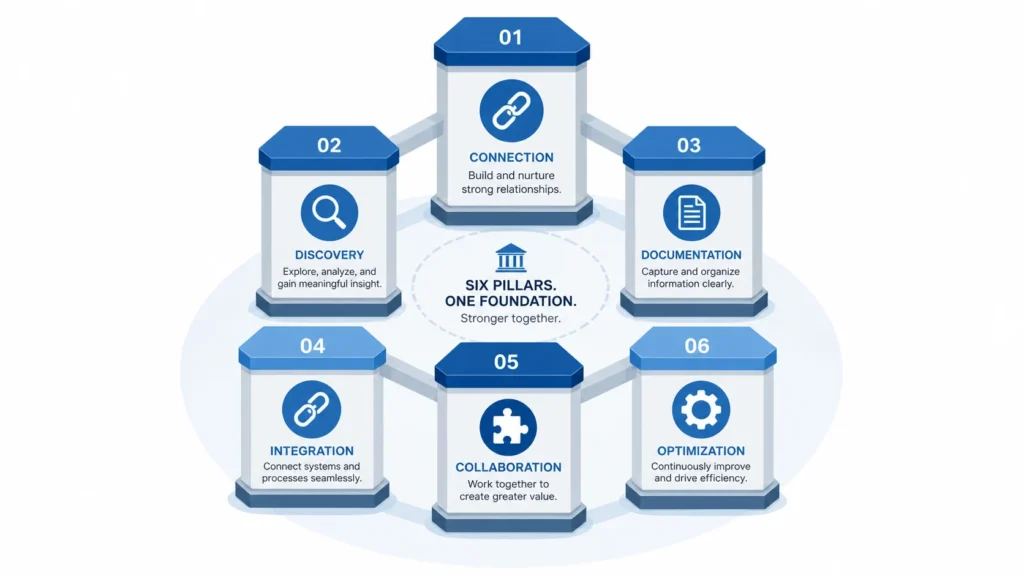
A working semantic seo strategy generally rests on six pillars:
- Topical authority and content clusters. Instead of one isolated article, you build a group of interlinked pages covering a topic from multiple angles, with one central “pillar” page and several supporting pages.
- Entity optimization. Clearly defining the people, places, products, or concepts your content references, so search engines can connect them to known entities.
- Search intent matching. Writing to satisfy the actual reason someone searched, not just the literal phrase they typed.
- Content structure and readability. Using descriptive headings, short paragraphs, and logical flow so both readers and machines can extract information easily.
- Internal linking based on relationships. Linking pages together in a way that reflects how topics genuinely relate to each other, not just for the sake of link volume.
- Structured data. Using schema markup to explicitly tell search engines what type of content is on the page.
Building the Strategy: A Step-by-Step Process
Here’s how this typically plays out in practice. Our team at LocalPro1 usually starts by mapping a topic before writing a single sentence.
Step 1: Start with the topic, not the keyword. Identify the broader subject a user cares about, then work backward to the specific phrases they might use.
Step 2: Study real search intent. Look at “People Also Ask” boxes, related searches, and existing top-ranking pages to understand what questions are still going unanswered.
Step 3: Build a topical map. Sketch out a pillar page and the supporting subtopics it needs to link to, covering the full scope of the subject.
Step 4: Identify related entities. List the people, tools, concepts, and terms that naturally belong in the conversation, and make sure they’re clearly referenced in the content.
Step 5: Write to cover follow-up questions. A reader shouldn’t need to open a second tab to get their answer.
Step 6: Add schema markup. Article, FAQ, and HowTo schema help search engines parse the page’s structure accurately.
Step 7: Link internally with intent. For example, a page on this topic might link to a dedicated Semantic SEO Services in New York page for readers who want hands-on implementation help rather than a DIY approach.
Step 8: Track engagement, not just rankings. Time on page, scroll depth, and return visits often tell you more about content quality than position alone.
You may also read: What Is On-Page SEO?
A Real-World Scenario
Picture a local service business with a blog post that simply defined a term in 300 words and stopped there. After restructuring it into a full topic cluster, adding entity references, FAQ schema, and internal links to relevant service pages, the page began appearing for dozens of related question-based searches it had never directly targeted before, because it now answered the topic completely instead of just naming it.
Common Mistakes to Avoid
- Chasing keyword density instead of clarity. Repeating a phrase doesn’t help if the surrounding content lacks substance.
- Publishing thin, unedited AI output. This is precisely the kind of content the August 2026 spam update was built to catch.
- Ignoring entities and relationships. A page that never clarifies what or who it’s referring to leaves too much for search engines to guess at.
- Skipping content clusters entirely. A single standalone page rarely builds the topical depth needed to compete for a broad subject.
Final Thoughts
Semantic SEO isn’t a trend that will fade with the next algorithm update; it reflects how search engines fundamentally interpret content now. Building topical depth, defining entities clearly, and writing for real intent will keep paying off long after individual keyword tactics stop working. If you’re ready to apply this to your own site, contact us at LocalPro1 and our team can walk you through where your current content has gaps and how to close them.
FAQs
What’s the difference between semantic SEO and traditional keyword SEO?
Traditional SEO optimizes for a single phrase and its exact match. Semantic SEO optimizes for the full topic, including related concepts, entities, and the actual intent behind the search.
Is semantic analysis seo only relevant for large websites?
No. Small and local businesses benefit as much, if not more, because covering a topic thoroughly helps them compete against larger sites that publish thinner content at scale.
How long does a semantic seo strategy take to show results?
Most sites start seeing movement within two to three months, though full topical authority for competitive subjects can take longer depending on the existing content gap.
Does schema markup actually improve rankings?
Schema doesn’t directly boost rankings on its own, but it helps search engines understand and often display your content more accurately, which can improve click-through rates.
Can I apply semantic SEO to an existing website without a rewrite?
Yes. Most sites can improve significantly by restructuring existing pages into clusters, strengthening internal links, and filling content gaps rather than starting over.