
Can You Do Local SEO Without a Website?
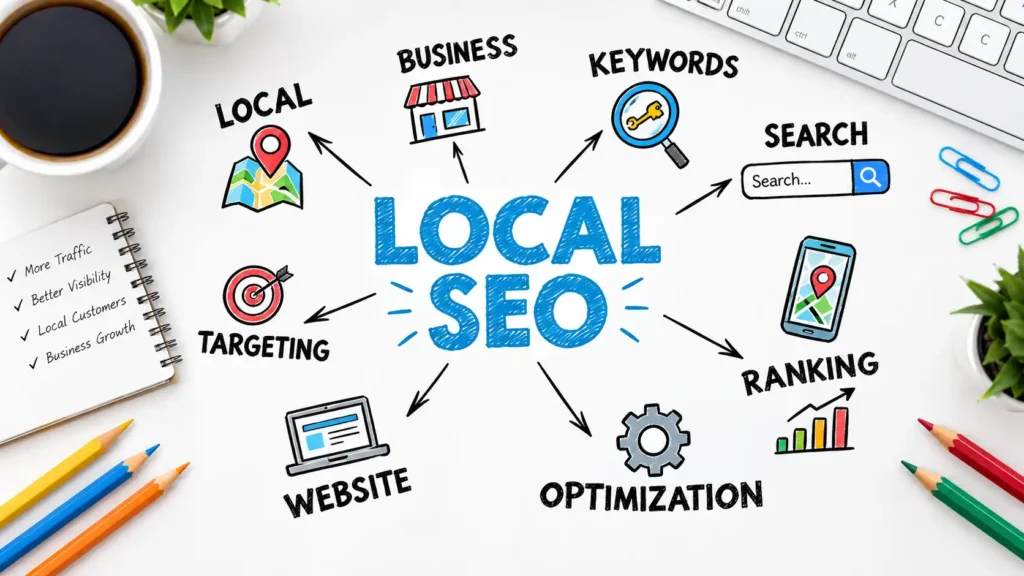
Picture a home baker whose orders come from neighbours, school parent groups and friends of friends. Or a plumber whose phone rings because a customer’s cousin passed on his number. Work is steady, so a website feels like homework nobody asked for. Then someone says, “I searched for you and found nothing.”
- Can You Do Local SEO Without a Website? The Short Answer and the Catch
- How Local Search Actually Works, in Plain English
- What You Can Do Without a Website
- Where Going Website-Free Starts to Hurt
- Staying Safe After Google’s September 2026 Spam Update
- Service-Area Business? Here’s What Changes
- When Should You Finally Build a Website?
- A Simple 7-Day Starter Plan
- Final Thoughts
- FAQs
So, can you do local SEO without a website? Yes, though it’s like running a stall in a rented market: shoppers find you, but you don’t own the ground. This guide from LocalPro1 covers what works, what doesn’t, where the risks sit, and when to finally build a site.
Quick answer: Yes. Without a site, your Google Business Profile acts as your shopfront. Google weighs how complete it is, how well your category fits the search and what customers say about you, instead of reading website pages. Matching listings on other map apps and directories, steady Google reviews and active local social posts add support. The trade-offs are a lower ceiling in crowded markets, less trust from careful buyers, thinner tracking and a higher suspension risk when no street address is shown.
Can You Do Local SEO Without a Website? The Short Answer and the Catch
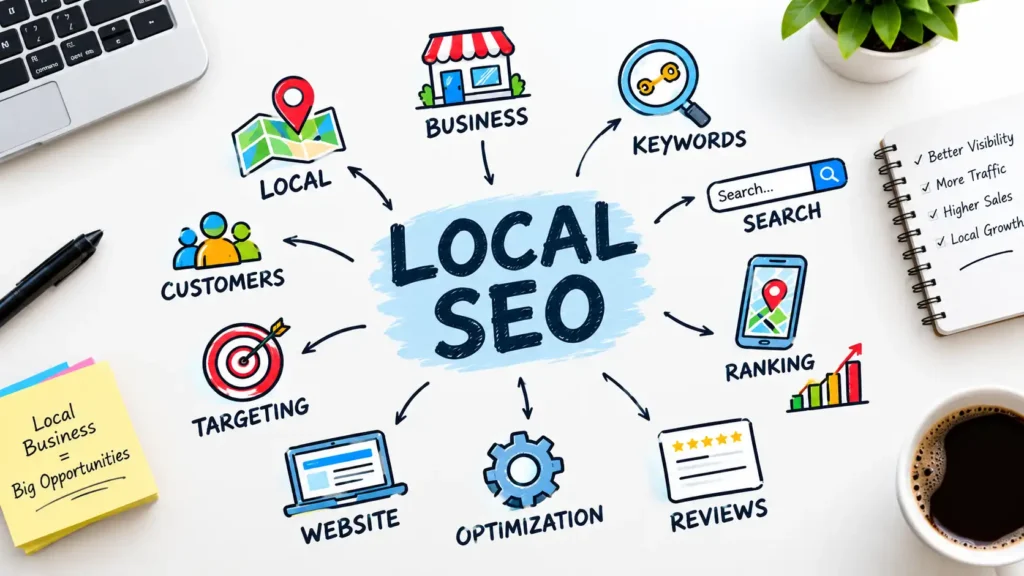
Most of what decides who lands in the map pack happens on Google’s side, not yours. Your profile, reviews, category and location do the heavy lifting. A website helps in other ways, but it isn’t the entry ticket.
What changes is the ceiling. Someone searching “tailor near me” can find a strong profile. Someone searching “how to hem trousers at home” never will, because there’s no page to show. And on a street with ten similar shops, the ones with a site behind their profile simply give Google more to work with.
Here’s a quick way to see where you stand.
| You’ll probably be fine without a website if… | You’ll probably struggle if… |
| Most of your work comes from nearby or repeat customers | You sell high-ticket services people research for days |
| Your service is simple enough to describe in one line | You offer many services that each need explaining |
| Competition in your area is light | Your area is full of established competitors |
| You can collect reviews steadily | You need to know exactly where your leads come from |
If you land mostly on the left, starting without a site is a reasonable call. If you land on the right, treat your profile as a bridge, not a destination.
You may also read: What Is Local SEO
How Local Search Actually Works, in Plain English
Google describes local ranking through three ideas: relevance, distance and prominence. None of them requires a website, though a website can feed each one.
- Relevance is how well your profile matches what someone typed. You earn it through your primary category, services list and description. A bakery that lists “eggless birthday cakes” gives Google more to match than one that only says “bakery.”
- Distance is how far you are from the searcher or the area they named. You can’t change geography, but you can keep your pin, address or service area accurate. Sloppy location data is the easiest way to lose a search you should have won.
- Prominence is how well known you seem, based on Google reviews, mentions across the web and general reputation. Without a website, this is where reviews and consistent listings carry most of the weight.
Imagine someone typing “emergency plumber near me” at 9 pm. Google favours plumbers who are close, whose services fit and whose reputation looks real. A plumber with a tidy profile and plenty of honest reviews can beat one with a lovely website and a half-empty profile. That’s the opening you’re working with.
What You Can Do Without a Website
Doing local SEO without a website mostly means doing a few basics properly and keeping them consistent. Here’s where to put your effort.
Build a Complete Google Business Profile
Start with the primary category, because it carries more weight than almost any other field. Pick the one that describes what customers mostly pay you for, not the broadest label available. A home baker who mainly sells custom cakes is better served by a cake-focused category than a generic food one. Add secondary categories only for services you genuinely offer.
Use your real-world business name, exactly as it appears on your signage, invoices and packaging. No city names, no keywords, no slogans.
Write the description the way you’d explain your work to a new neighbour: what you do, who it’s for and which areas you cover. You have about 750 characters, so there’s no need to stuff it. Then fill in the rest:
- Services or products, with honest prices or “starting from” figures where possible
- Opening hours, including holidays and special days
- One main phone number that matches everywhere else. If you use a call tracking number, add it as a secondary number so your main details stay consistent
- Real photos of your work, premises, vehicle and team, added regularly. Skip stock images
- Short posts about recent jobs, offers or availability, written in normal language
Collect and Respond to Real Google Reviews
Reviews are where a website-free business earns its reputation, so make asking a habit. Ask right after a job goes well, while the customer is still pleased. A short text message with your review link works, and so does a small QR code on the receipt, invoice or counter.
Don’t script what people say. Ask them to describe what they bought or what you fixed. If they mention the neighbourhood on their own, that helps, but it should be their words.
Reply to every review. For a negative one, thank the person, acknowledge the problem, offer to sort it out offline, and stop there. No arguments and no hints about who the customer is. Future customers read your reply as closely as the complaint.
One warning: buying reviews, swapping them with other businesses, offering discounts in return, or only inviting happy customers to review all go against Google’s policies. Reviews can be removed and a profile can be restricted, which is a fast way to lose the one asset you’re relying on.
Back It Up With Local Citations, Map Listings and Real Mentions
Local citations are mentions of your business name, address and phone number on other sites. Their job is to confirm that your details are real and consistent. Keep it small and accurate:
- Claim your listing on other major map and navigation apps, since not everyone searches on Google
- Join a handful of directories that fit your trade or city, not hundreds of random ones
- Match your name, address and phone number everywhere, and fix old details after a move or number change
- Set up one or two social profiles, put your area in the bio, and share real work and short updates about where you’ve been working
- Look for genuine local mentions, such as neighbourhood groups, community events, or local suppliers who’ll list you as a partner
Volume doesn’t help here. A dozen accurate listings beat a hundred copied ones, and bulk listings can look like exactly the sort of pattern Google’s spam systems are built to catch.
Where Going Website-Free Starts to Hurt
Be honest about this part before you commit. You can’t compete for informational searches. A profile can’t answer “what does a boiler service include,” but a web page can. That is also how topical authority gets built: many useful pages over time. With no pages, there’s nothing to build.
There’s a credibility gap, too. People spending serious money, on a kitchen remodel or legal help for example, often look for a website before they call. No site can be read as “too small,” fairly or not.
Tracking is thin. Your profile shows calls, direction requests and views, but not what someone did before reaching out or which area brings your best leads. You also can’t earn local backlinks to a page you don’t have.
Then there’s platform risk. Profiles can be reported, especially a service-area business without a public address in an aggressive market where rivals flag each other. A suspended profile disappears from search until it’s reinstated, which usually means sending evidence such as a business licence or photos of signage or vehicles. With no website, you have nowhere else to point customers in the meantime.
Reality check: what to expect in the first 3 to 6 months without a website A verified, complete profile that appears for your business name and for searches close to your location. A slow, steady rise in calls and direction requests as reviews build up. Slower progress if your category is crowded. No guarantees, because results depend on competition, category and how accurate your profile stays.
You may also read: Benefits of Local SEO
Staying Safe After Google’s September 2026 Spam Update
Google started rolling out its September 2026 spam update on 24 September, and it wrapped up on 8 October. Google called it a normal spam update with nothing new announced, and it hasn’t said which tactic the update focused on.
With no specifics to go on, the sensible move is to follow Google’s published spam policies and Business Profile guidelines instead of guessing. It matters more when you have no website, because your profile is your only storefront. If a system or a competitor’s report flags it, there’s no second page keeping you visible.
Shortcuts to avoid:
- Stuffing keywords or city names into your business name
- Using a fake address, virtual office or P.O. box as your location
- Creating several profiles for the same business
- Buying, trading or faking reviews
- Mass-creating profiles or thin local citations just to look bigger
- Posting copy-pasted or AI-generated text at scale with no real value
Real business, real details, real customers is the safest strategy there is.
Service-Area Business? Here’s What Changes
A service-area business travels to customers, so it doesn’t need to show a street address. In your profile you can hide the address and list the areas you serve instead. List places you genuinely cover, not every town within driving distance. Google limits how many areas you can add, and stretching that list is a classic way to look spammy.
Without an address, proof of local activity has to come from elsewhere:
- Reviews that mention neighbourhoods and jobs naturally
- Photos of real jobs in specific areas, taken with the customer’s permission
- Posts about where you’ve been working lately
- The same service-area details on every listing
Take a mobile dog groomer who covers three suburbs. One post a week about a grooming session, a photo of the van outside a client’s gate (with permission), and reviews from owners in each suburb build a clear picture of local activity.
Two edge cases are worth knowing. A home-based business can hide its address, but verification may ask for extra proof, such as a video of your equipment or vehicle. And if you run a shop that also delivers, keep the shop address public and add delivery areas on top.
When Should You Finally Build a Website?
Here’s a simple checklist LocalPro1 recommends. If two or three of these sound familiar, it’s time:
- You’re paying for ads and need a page to send people to
- You want to appear for more than the map pack, such as service or question searches
- You offer several services that each deserve an explanation
- Customers keep asking for a link or a price list
- You want to grow beyond your immediate area
Start tiny. A one-page site with your name, services, area, a few photos, reviews and a click-to-call button is enough. It doesn’t have to be a big project.
If you’re in or around New York and want help connecting that first site to the profile you’ve already built, our Local SEO Services in New York page explains how we approach it.
You may also read: How to Improve Local SEO
A Simple 7-Day Starter Plan
- Day 1: Claim or create your profile and check your business name and primary category.
- Day 2: Complete verification.
- Day 3: Fill in every field: description, services, hours and phone number.
- Day 4: Upload around ten real photos of your work and premises.
- Day 5: Ask five recent happy customers for a review.
- Day 6: Claim your other map listings, add a few relevant directories and fix any mismatched details.
- Day 7: Publish your first post, then set a weekly reminder to add a photo, reply to reviews and post an update.
Final Thoughts
Start with what you already have: a real business, real customers and a profile you can fill out today. Do it honestly, keep your details consistent, and let reviews build at their own pace. Can you do local SEO without a website? You can, and plenty of businesses do. Just remember it’s a starting point, and when growth asks for more, a simple site is the natural next step.
If you’d like a second opinion on your profile or a plan for what comes next, contact us at LocalPro1 and we’ll help you figure it out.
FAQs
Can you do local SEO without a website if you only serve a small area?
Yes, and small areas are where it works best. If competitors are few, a complete Google Business Profile with steady reviews can be enough to bring regular calls. The risk grows as more businesses around you start doing the same.
Can I show up on Google Maps without a website?
Yes. Google Maps pulls from your verified Google Business Profile, not from a site. Complete your details, choose the right category and keep your location accurate, and you can appear for nearby searches. A website simply gives Google extra information to work with.
Is a Google Business Profile enough on its own?
For a simple, nearby service with light competition, it can be. For high-ticket services, many offerings or growth plans, it usually isn’t. Think of it as a strong starting point that eventually needs a website beside it.
Can a business without a physical address do local SEO?
Yes, as a service-area business. You hide your address, list the areas you actually serve, and build proof through reviews and real job photos. Never use a P.O. box or virtual office as a fake location, because that can get your profile suspended.
How long does local SEO take without a website?
There’s no fixed timeline. A verified, complete profile can start appearing for close-by searches fairly soon, but ranking well in a competitive area takes steady reviews and consistent activity over months. Treat the early weeks as foundation work, not a verdict.
Ready to Grow Your Business Online?
Get a custom strategy built around your goals. Our team will review your current marketing and show you exactly where the growth opportunities are.
- Free 30-minute strategy call
- Custom growth roadmap
- No obligation or hidden fees