
Is Web Design Still Worth It in 2026?

You’ve probably seen the demos. Type a sentence, wait a minute, and a whole website appears. It’s impressive, and it makes one question hard to ignore: why pay anyone to design a site? So, Is Web Design Still Worth It in 2026? For most businesses, yes, as long as the website has a clear job to do. LocalPro1 looks at it from a practical angle.
- The Short Answer: Yes, but the Job Has Changed
- Why So Many People Think Web Design Is Dying
- What the Numbers Actually Say
- Where Businesses Are Still Spending Money on Design
- When Web Design Is Worth It and When It Isn’t
- Web Design vs Web Development: Which One Do You Actually Need?
- How Much Does Web Design Cost in 2026?
- Is Web Design Still a Good Career or Side Income?
- How to Get Real Value From Your Next Website
- Final Verdict
- Frequently Asked Questions
A site is worth paying for when it brings in calls, bookings or sales, and it’s wasted money when it just sits there looking tidy. Below you’ll find real numbers, a realistic web design cost breakdown, and a short checklist so you can decide for yourself.
Quick answer: Yes. Web design is still a smart investment in 2026, but the value has moved from assembling templates to strategy, usability, speed and trust. Basic layouts are now cheap and automated. Sites that persuade people to act still need human judgment.
The Short Answer: Yes, but the Job Has Changed
A decade ago, a designer could make a decent living by dropping a client’s logo into a template. That corner of the market is crowded now, and AI website builders have squeezed it further. What hasn’t disappeared is demand for sites that actually perform. Businesses now pay for outcomes: more enquiries, fewer visitors bouncing, pages that load on a cheap phone, forms that work. Design in 2026 is about strategy, user experience, performance and accessibility. The visuals are one part of the package, not the whole thing.
Picture two dental clinics on the same street. Both have clean, modern sites made in an afternoon. One buries the booking button under a slider and shows a phone number you can’t tap. The other puts booking above the fold and describes treatments in the words patients really type into search. Same budget on paper, very different Monday mornings. (That’s an illustrative scenario, not a case study.)
When average sites become free, a good one is easier to notice. That’s the quiet upside of the AI wave. Two other shifts are worth knowing. Some sites now adjust what they show, for example greeting a returning visitor differently from a first-timer, and somebody still has to decide those rules. And the popular saying among designers is that AI won’t replace them, but designers who use it well will replace those who don’t. It sounds neat, yet the logic holds.
Why So Many People Think Web Design Is Dying
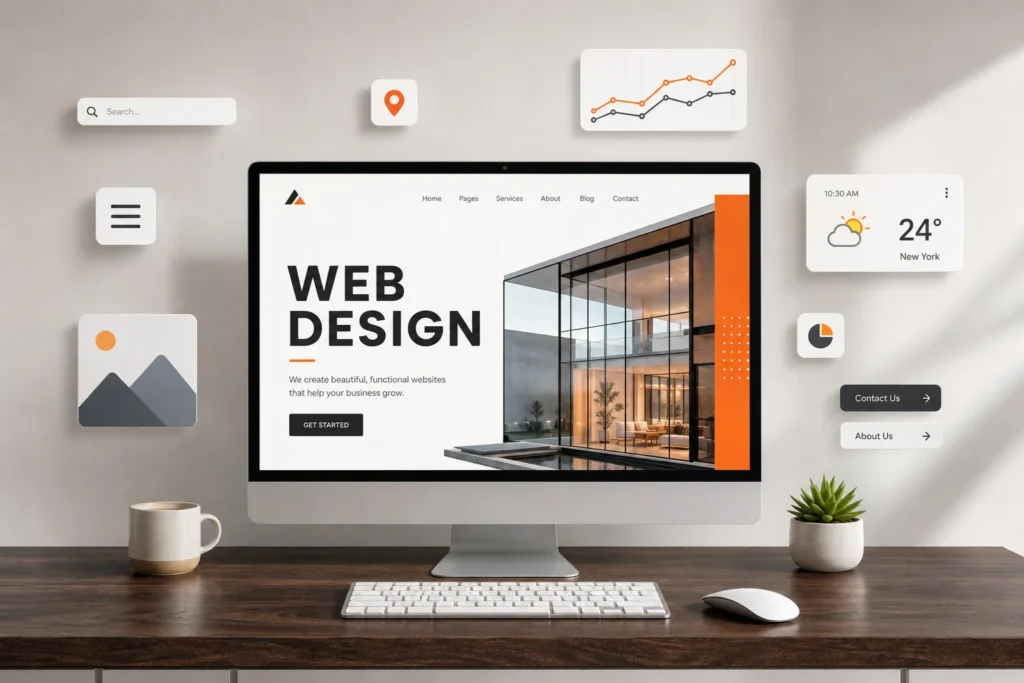
A good website is more than a pretty homepage. It brings together clear layout, easy navigation, search, analytics and strong calls to action.
Three forces feed the fear: AI website builders, template culture, and rock-bottom entry prices. If a five-page site can exist by lunchtime, why would anyone value the craft?
To be fair, these tools are good enough. They produce layouts quickly, write placeholder copy, handle routine code and get a simple static site online in hours. For a hobby project, a quick test of an idea or a personal portfolio, that’s often enough.
Here’s where they stall:
- Brand thinking. A builder gives you what you ask for. It won’t tell you that you’re asking for the wrong thing.
- Conversion logic. It can’t see why visitors hesitate at your pricing page or abandon a form at field four.
- Positioning. When every site in your niche uses the same hero image and the same “trusted by thousands” line, trust blurs. Standing apart takes a decision, not a prompt.
One edge case people overlook: machine-built sites tend to look alike. If your competitors all publish near-identical pages, being recognisably different becomes a real advantage.
What the Numbers Actually Say
Opinions are cheap, so let’s look at the data. If Is Web Design Still Worth It in 2026 were a shrinking-industry question, the market figures would show it. Instead, a 2026 statistics roundup values the global web design market at about $60.9 billion, growing roughly 8.5% a year toward $92 billion by 2030. Professions in decline don’t usually grow like that. The usage numbers matter too. Around 64% of global web traffic now comes from mobile devices, so a mobile-friendly website is the default, not a bonus feature.
Performance is where many sites fall short. Google’s field data shows only about 42% of pages passing Core Web Vitals on mobile, compared with 63% on desktop, and roughly 95% of websites still fail basic accessibility standards. In plain English: most sites are still slow on phones and awkward for some people to use. That gap is exactly where skilled design work earns its fee. Treat these figures as third-party estimates and check the dates before quoting them.
Where Businesses Are Still Spending Money on Design
LocalPro1 would sort current spending into five areas, and none of them is simply “make it prettier.”
- Conversion-focused redesigns and landing pages. A smart website redesign usually starts with the three pages that get the most traffic, not the entire site. Small changes to a headline, form or call to action can lift conversion rate more than a new colour scheme.
- Speed and performance. Oversized images, heavy scripts and slow fonts quietly cost enquiries. Fixing Core Web Vitals is detailed technical work that builders rarely handle well.
- Accessibility. Colour contrast, keyboard navigation, labelled form fields and meaningful image descriptions help real people. In some regions there’s legal exposure too, so check your local rules.
- Design for AI-powered search. Clear headings, a direct answer near the top of the page, consistent business details and well-structured information make it easier for search engines and answer tools to understand and quote you correctly.
- E-commerce friction and trust. Showing delivery costs early, offering guest checkout and making returns policy visible all reduce abandoned carts. Small details like these decide whether a shopper finishes the purchase.
When Web Design Is Worth It and When It Isn’t
It’s worth it when:
- Your website is a lead or sales channel, not decoration.
- You compete on trust, which is common in trades, health, legal and financial services.
- Your current site is slow, outdated or hard to use on a phone.
It’s probably not worth it yet when:
- You’re still testing whether anyone wants your offer.
- Your customers live on one social platform and buy through direct messages.
- You can’t yet describe what you sell in a single sentence.
A quick five-question self-check. Answer yes or no:
- Do customers look you up online before they buy?
- Would one extra inquiry a week pay for the project?
- Is your current site slow, dated or clumsy on mobile?
- Can you explain your main offer in one sentence?
- Does trust, more than price, decide the sale?
Three or more yeses means professional design will probably pay for itself. If you decide to hire locally, a Web Design Company in NewYork should be able to show past work in your industry and explain what happened after those sites launched, not just how they looked on day one.
Web Design vs Web Development: Which One Do You Actually Need?
People mix these up constantly, which leads to hiring the wrong person. Design decides how the site looks, flows and persuades. Development makes it work behind the scenes.
| Web Design | Web Development | |
| Main role | Planning layout, user experience and visual identity | Building features, integrations and site logic |
| Typical skills | UX thinking, typography, copy structure, prototyping | Coding, databases, security, performance tuning |
| Typical output | Wireframes, page designs, style guides | Working site, booking systems, checkout, custom tools |
| Who needs it most | Businesses whose site isn’t converting or looks untrustworthy | Businesses needing custom features or complex integrations |
Many small projects need both in modest amounts. A simple brochure site leans on design. A booking platform with payments leans on development.
How Much Does Web Design Cost in 2026?
These are rough planning ranges drawn from public pricing guides, not quotes. Prices vary by country and city.
- DIY builder: around $300 in the first year.
- Freelancer: roughly $1,000 to $5,000 upfront.
- Small agency: often $3,000 to $10,000 for a custom small-business site.
- Typical professional small-business build: commonly $2,000 to $8,000, with more advanced projects reaching $15,000 or more.
Don’t forget running costs. Ongoing expenses such as hosting, updates and maintenance can add roughly $1,100 to $5,000 a year.
What pushes the web design cost up or down? Page count, how much original copy and photography you need, custom integrations, and timeline. Online stores are the big multiplier, since features like inventory management and checkout flows can double or triple the base price.
Watch for cheap quotes that hide expensive terms. Not owning your domain, having no login to edit your own content, and paying for every small change are three classic red flags.
What you should get for your money:
- Ownership of your domain and admin access
- A mobile-friendly layout tested on real phones
- Basic speed and accessibility checks
- Clear page structure with a defined goal for each page
- Tracking set up so you can see enquiries
- A short handover so you can make simple edits
You may also read: Why Is Web Design Important?
Is Web Design Still a Good Career or Side Income?
If you’re a beginner or freelancer, the honest answer to Is Web Design Still Worth It in 2026 as a career is: yes, with conditions. Entry-level, template-only work is tougher than it used to be. Pay varies widely by location and speciality, and experienced people who own strategy and results tend to earn well above beginners, so check official labour statistics for your own market rather than trusting a single headline number.
Skills gaining value: UX thinking, persuasive copy, SEO basics, performance tuning and accessibility.
Skills being automated: Basic layout assembly, boilerplate code and stock section building.
Two practical moves help. First, niche down. A designer who specialises in, say, clinics or home-service companies understands the customer’s worries and can charge for that insight. Second, shift from one-off projects toward ongoing care plans covering updates, testing and improvements.
Use AI as an assistant, not a rival. It’s useful for first drafts, layout variations, code scaffolding and alt-text ideas. A human still needs to check accuracy, taste and fit for the client.
How to Get Real Value From Your Next Website
- Pick one goal before design starts. Calls, bookings, quote requests or sales. Everything else supports that.
- Write content before layout. Designing around real headlines and real answers beats filling boxes with placeholder text.
- Measure from day one. Track enquiries, form completions, speed scores and mobile behaviour. If you can’t measure it, you can’t improve it, so set up tracking before launch.
- Keep it human. Use real photos, real names and plain language. Generic, machine-sounding pages weaken trust, and a thin, repetitive page gains little from a nicer layout.
- Plan the next improvement. A website redesign shouldn’t be a once-every-five-years panic. Small, regular improvements to your highest-traffic pages usually lift conversion rate more steadily.
Final Verdict
So, Is Web Design Still Worth It in 2026? Yes, when the website is meant to win trust and generate business. Cheap tools have made average sites easy, which means the value now sits in strategy, user experience, speed and clear communication. If your site is only there to exist, a builder may do. If it needs to be earned, design is still worth paying for.
Your next step doesn’t need to be big. Run the five-question check, look at your top three pages on a phone, and note what slows people down. If you’d like a second opinion, contact LocalPro1 and we’ll talk through what your site needs, with no pressure to buy anything.
Frequently Asked Questions
Can AI replace a web designer?
AI can take over repetitive work such as basic layouts and routine code. It can’t decide your positioning or understand why your customers hesitate, so the best results come from a web designer who uses AI as a tool.
Is it cheaper to build my own website?
Upfront, usually yes, since AI website builders can get you online for a few hundred dollars in the first year. But if the site is slow, confusing or fails to convert, the enquiries you lose can outweigh the web design cost you saved, so judge it by how much business the site should bring in.
How long does a website stay modern?
As a rough rule of thumb, a well-built site stays useful for several years with regular updates. Standards like Core Web Vitals and mobile usability tend to force a website redesign sooner than visual trends do.
Does design affect SEO rankings?
Indirectly, yes. Design shapes page speed, mobile usability, readability and how easily people find answers, all of which affect how visitors behave. It won’t rescue a thin or unhelpful page, because Google rewards content that genuinely helps people.
What should I look for when hiring a designer?
Ask for work in your industry and what happened after launch, such as enquiries or speed improvements. Confirm you’ll own your domain and admin login, and ask who writes the content, since that’s often the part that gets forgotten.
Ready to Grow Your Business Online?
Get a custom strategy built around your goals. Our team will review your current marketing and show you exactly where the growth opportunities are.
- Free 30-minute strategy call
- Custom growth roadmap
- No obligation or hidden fees