
Running an online store without traffic is like opening a shop in the middle of nowhere. You have great products, a clean website, and a solid offer but no one shows up. So, do eCommerce sites need SEO and PPC? The short answer is yes, and this guide explains exactly why both matter.
Many store owners pick one channel and hope for the best. That approach leaves money on the table. Organic traffic builds slowly but stacks up over time. Paid ads bring fast clicks but stop the moment your budget runs dry.
What is SEO for eCommerce?
Search engine optimization SEO is the process of improving your store so it appears higher in organic search results. When someone types “buy running shoes online,” SEO is what puts your store on the first page without paying for each click.
For eCommerce, SEO builds trust over time. Google rewards stores that publish helpful content, earn backlinks, and offer fast, clean experiences. The results are not instant, but they compound. A page that ranks today can drive organic rankings and sales for years.
Key benefits of SEO for online stores:
- Drives organic traffic without paying per click
- Builds long-term authority in your niche
- Lowers your cost effective customer acquisition over time
- Works 24/7 once pages are ranked
What is PPC for eCommerce?
Pay per click PPC means you pay every time someone clicks your ad. Google Ads, shopping ads, and display campaigns fall under this bucket. You set a budget, choose your audience, and your store appears at the top of the search engine results page instantly.
PPC delivers what SEO cannot: immediate visibility. New product launch? Run an ad today and get traffic tonight. Seasonal sale? Push it hard for two weeks, then turn it off.
Key benefits of PPC for online stores:
- Instant traffic no waiting for rankings
- Precise targeting by keyword, location, and device
- Fast data on what converts
- Full control over spend and timing
SEO vs PPC for eCommerce
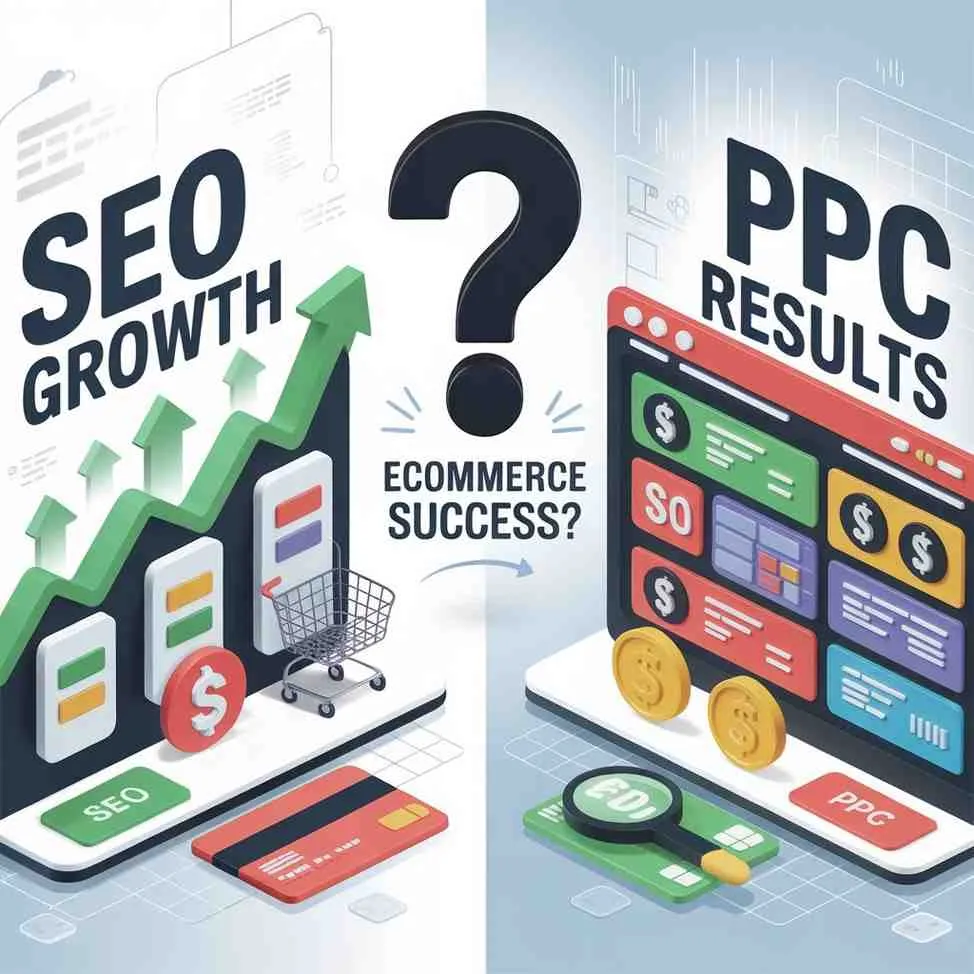
Understanding SEO vs PPC for eCommerce helps you decide where to invest first. Here is a side-by-side breakdown:
| Factor | SEO | PPC |
| Time to Results | 3–6 months | Hours to days |
| Cost | Time + content investment | Budget per click |
| Sustainability | Long-term | Stops when budget ends |
| Trust Signal | High (organic feel) | Lower (marked as ad) |
| Scalability | Compounds over time | Scales with budget |
| Data for Testing | Slow | Fast |
Neither wins outright. Both fill a different gap in your eCommerce marketing strategy SEO and PPC. The real question is not which one it is, when and how to use each.
Do eCommerce Sites Need SEO And PPC?
Yes. eCommerce sites need SEO and PPC working together to build a complete growth system.
Here is why relying on just one fails:
SEO alone means slow early growth. New stores can wait 6–12 months before seeing meaningful organic traffic. During that period, you need sales now not later.
PPC alone burns the budget fast. Without SEO backing you up, every click costs money. Once your ad spend stops, so does your traffic. There is no compounding effect, no lasting asset.
When sites need both SEO and PPC, they cover both angles: fast results today, sustainable growth tomorrow. Together, they create a full-funnel system where customers find you at every stage.
Why SEO and PPC Together is a Powerful Strategy
This is where most articles stop. They say “use both” and move on. Here is the actual strategy that top-performing eCommerce marketing strategy SEO and PPC campaigns use.
Dominate the Search Results Page
When your store runs ads and ranks organically, you take up more real estate on the search engine results page. Users see your brand twice. That double presence builds recognition and increases clicks overall.
PPC Data Improves SEO
PPC campaigns tell you which keywords convert fast. Take that data and build SEO content around those exact terms. You skip months of keyword guessing and go straight to what your buyers actually want.
Retargeting Boosts Conversion Rate
A visitor finds your blog through SEO. They read, leave, and forget. A retargeting ad brings them back. This loop organic search results pulling them in, paid ads pulling them back dramatically improves your conversion rate and overall ROI (return on investment).
Full Funnel Coverage
SEO captures people researching (“best running shoes for flat feet”). PPC captures people ready to buy (“buy running shoes size 10”). When SEO and PPC work in sync, you cover the entire buyer journey not just one slice.
When to Use SEO
Is SEO or PPC better for eCommerce when you are on a tight budget? SEO wins here.
Choose SEO when:
- You have time but limited ad spend
- You want to build long-term brand authority
- You are publishing product guides, comparisons, and tutorials
- You want traffic over time that does not depend on daily spend
SEO is also the right move when your marketing strategy focuses on content product reviews, buying guides, how-to articles. These pages rank, educate buyers, and convert without costing you per click.
When to Use PPC
PPC campaigns shine in moments where speed matters.
Use PPC when:
- You just launched your store and need traffic fast
- You are running a seasonal or limited-time sale
- You want to test a new product before investing in SEO content
- You need data on what keywords actually drive purchases
New Shopify store owners especially benefit from paid ads early on. At localpro1, we see this pattern often in our Shopify Development Services clients launch clean, fast stores and need immediate visibility while their SEO foundation builds. Running ads from day one fills that gap perfectly.
The Best Strategy: Combine SEO and PPC
The smartest approach follows a simple sequence.
Step 1: Start with PPC
Launch your store with targeted ppc campaigns. Test product pages, headlines, and offers. Gather real conversion data. Find out which keywords bring buyers, not just browsers.
Step 2: Feed That Data Into SEO
Use your best-performing PPC keywords to build SEO content. Write product guides, comparison pages, and category content around those terms. This is how you combine SEO and PPC without guessing.
Step 3: Scale Both Together
As your SEO pages gain rankings, reduce ad spend on those specific terms. Redirect budget to newer products or seasonal pushes. Your long-term SEO traffic now supports your paid campaigns, lowering your cost per acquisition.
This hybrid approach gives you long-term vs short-term results PPC for now, SEO for later, both working as one system.
Real Example: How It Works in Practice
A home decor Shopify store launches in January. They run Google shopping ads to drive traffic to their best-selling products. Within two weeks, they know which items convert best and which keywords bring the most buyers.
They take those keywords and write a blog post: “Top 10 Living Room Rugs Under $200.” That post targets organic rankings for a high-intent search term. Over the next four months, it climbs to page one.
Now the store is visible in ads and in organic results for the same buyer. The ad drives the first visit. The blog drives the return. A retargeting ad closes the sale. That loop is exactly how eCommerce marketing strategy SEO and PPC works when done right.
Common Mistakes eCommerce Stores Make
Relying only on SEO
Some stores publish great content but run no ads. Their early months are slow, sales are inconsistent, and they miss seasonal opportunities entirely. Paid ads are not optional when you need revenue now.
Relying only on PPC
Others spend heavily on ads but build no organic presence. Every sale costs them ad money. The moment budgets tighten, revenue drops. There is no SEO foundation to fall back on.
Not tracking ROI
Running both channels without tracking conversion rate and ROI (return on investment) per channel is a waste. Use Google Analytics and your ad platform dashboards to see what each channel actually earns. Double down on what works.
Ignoring the synergy
The biggest mistake is treating SEO and pay per click PPC as separate strategies. They share keyword data, audience behavior, and content opportunities. Treating them as one connected system is what separates growing stores from stuck ones.
Conclusion
Do eCommerce sites need SEO and PPC? Without question, yes. SEO builds the organic foundation that keeps your store growing without paying per click. PPC fills the gap when you need results fast. Together, they create a system where every marketing dollar goes further.
The stores that grow consistently are not choosing one or the other. They are running both with a plan. If your store is not getting the traffic or sales it deserves, localpro1 can help. Our team offers Shopify Development Services alongside full SEO and PPC strategy for eCommerce brands ready to grow. Contact us today and let us build a system that works long after the ads stop running.
Frequently Asked Questions
How long does SEO take for an eCommerce store?
Most eCommerce sites begin seeing measurable results from search engine optimization SEO within 3 to 6 months. Competitive categories may take longer, which is why pairing SEO with PPC in the early stages makes sense.
Can PPC improve SEO results?
Yes. PPC campaigns generate keyword and conversion data fast. That data tells you which terms your buyers actually use, so your SEO content targets the right queries from the start.
Is SEO or PPC better for eCommerce on a small budget?
If the budget is very tight, start with SEO-driven content and use a small PPC budget on your top-converting products. The benefits of SEO and PPC for online stores become clearer as both channels build on each other.
What is the best marketing channel for a new Shopify store?
Run paid ads immediately to generate early traffic and data. Use that data to build your SEO strategy. At localpro1, our Shopify Development Services include guidance on this exact launch sequence.