




- Your cart is empty Browse Shop
How to Write Website Content That Converts: A Complete Step-by-Step Guide
Building an effective online presence starts with crafting clear, purposeful copy. If you’re wondering how to write content for website success, you’re in the right place.
Good web copy directly answers what your visitors are searching for while clearly presenting your services. In this guide, we’ll walk through a proven step-by-step process to plan, write, and refine website copy that earns search engine visibility and builds immediate trust with your audience.
What Is Website Content?
Website content refers to all the text, photos, video and interactive features on a website. It takes visitors on a journey through pages, provides answers to their individual questions, explains services and offers just the information needed to facilitate confident decision-making online.
It’s more than just text, it’s the main communication layer between your business and your visitors. When done right, every word on your site has a purpose, whether it’s to clarify a service detail or describe next steps.
Good web copy is very different from traditional printed material or lengthy form publications. Readers on line tend not to read line by line from top to bottom, but to skim pages looking for answers to particular questions. The web is a different medium. You need short paragraphs, a disciplined layout and direct language that gives value straight away.
Pre-Writing Phase: Research & Content Strategy
Before typing a single headline, you need a clear blueprint. Jumping straight into drafting without proper preparation often results in cluttered pages, confused visitors, and missed search opportunities.
A strong content strategy relies on gathering accurate data upfront. Spending time on foundational research saves hours of editing down the line and keeps your writing aligned with actual visitor needs.
Industry Data & Research Practices
Include real metrics to back up your strategy. For example, search data shows that over 70% of web visitors skim pages rather than reading full paragraphs. Including a brief user survey on existing pages can highlight exactly what details missing visitors are looking for before they leave.
Why Website Content Matters for SEO and Conversions

The content you have on your website will immediately affect your search rankings and conversion rates by matching search intent, addressing important questions in a clear way, and creating topical authority. Good text keeps the reader engaged, reduces bounce rates and leads qualified leads to the outcome you want.
Search engines look at how well your sites answer the real questions users enter into search engines. If your copy is too wordy or not clear, visitors will hit the back button, signaling to search algorithms that your site was not helpful.
Conversion focused copy gives the obvious answers and then provides the user with logical help. You take the friction out of the decision making process by addressing typical issues up front. This balanced approach helps search engines understand your authority, while assisting visitors in taking the next step seamlessly.
Understand Your Audience Before Writing
Every effective web page begins with a deep understanding of the person reading it. Writing generic copy aimed at everyone usually ends up connecting with no one.
To create copy that resonates, you need to map out your audience’s primary characteristics, expectations, and immediate priorities:
- Identify Core Demographics: Determine who your main readers are, including their general background and familiar terminology.
- Map Primary Goals: Pinpoint the exact problem your visitor wants to solve when landing on your page.
- Uncover Common Objections: List every hesitation or concern that might prevent a visitor from moving forward.
- Evaluate Expertise Levels: Recognize that while you are an expert in your field, your visitors often hold baseline knowledge and need straightforward descriptions.
By adjusting your tone and detail level to match these factors, your content speaks directly to customer needs and answers customer questions naturally.
Planning Your Information Architecture
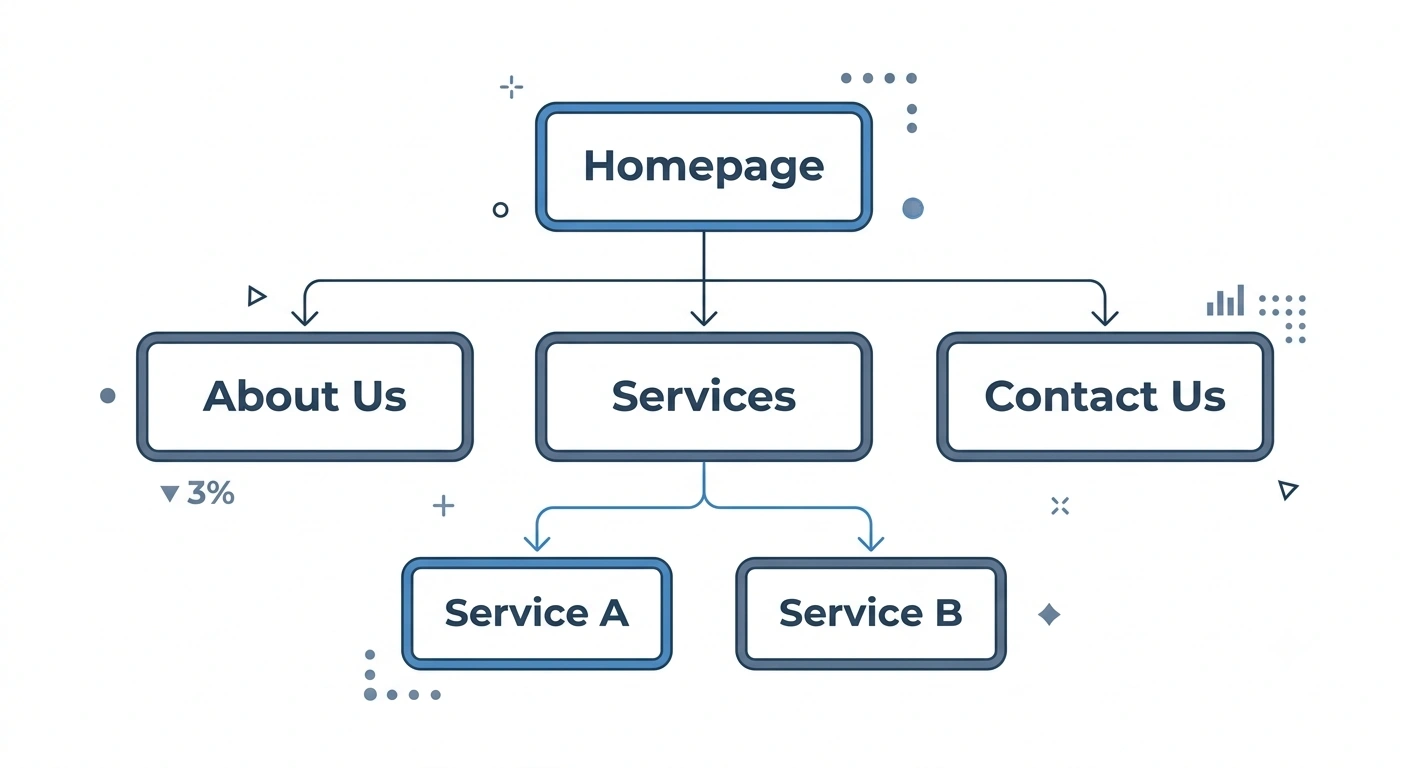
A visual guide to structuring your website sitemap and information architecture for intuitive navigation.
Information architecture refers to how content is organized, structured, and labeled across your site. When visitors arrive, they shouldn’t have to hunt for basic information.
A practical sitemap organizes major topics into logical top-level pages, followed by specific sub-pages. Grouping information based on user behavior and user expectations creates an intuitive layout that helps visitors navigate your site without frustration.
Research Keywords Before Creating Website Content
Keyword research reveals the exact phrases people use when looking for your solutions online. Mapping these terms to specific pages ensures your web copywriting guide addresses real-world search demand.
Focus on identifying target search queries that reflect high conversion intent rather than just broad search volume:
- Identify Core Topics: List the primary services or topics your site covers.
- Gather Search Phrases: Collect related terms, secondary keywords, and specific questions your audience asks.
- Analyze Intent: Determine whether users want quick facts, detailed guides, or direct service options.
- Map to Pages: Assign one primary search term and a small set of related terms to each distinct page on your sitemap.
This structured approach forms a solid seo content strategy for websites, keeping every page focused on a singular topic without overwhelming the reader.
How to Write Content for Different Website Pages
Different pages on your site serve distinct roles in the buyer journey. Below is a breakdown of how to structure your core pages effectively.
Homepage
Your homepage must immediately answer three basic questions: what you offer, who it’s for, and what to do next. Place a clear value proposition above the fold, supported by primary navigation links and direct calls to action.
Service Pages
Service pages should detail specific offerings, outlining clear features and direct benefits. Focus on addressing specific customer pain points and explaining exact processes so visitors understand what to expect.
About Us Page
The About page builds trust by sharing your organization’s mission, values, and background. Keep the focus centered on how your experience directly benefits the visitor.
Modern On-Page SEO Best Practices
Creating helpful copy means organizing text so both human readers and search crawlers can parse it easily. Applying proper structural standards keeps your content clear and scannable.
| Structural Element | Best Practice | Primary Benefit |
| Header Hierarchy | Use one single $H_1$ tag, followed by logical $H_2$ and $H_3$ subheadings. | Clarifies topic organization for readers and search crawlers. |
| Formatting | Keep paragraphs under 4 lines; use bullet lists for complex sets. | Accommodates short attention spans and F-shaped reading habits. |
| Link Placement | Add descriptive internal links using natural anchor text. | Helps visitors find relevant related information seamlessly. |
Proper formatting removes visual clutter, making it easier for visitors to absorb key details quickly.
Editing, Testing, and Refining Website Copy
Creating content for your website isn’t just writing your first draft. Proofread and polish your writing so it is accurate, compelling and easy to absorb.
Print out your manuscript and read it aloud to hear incorrect language or unnecessarily complex sentences. Check that every paragraph conveys a clear argument within the first few words. Once you launch, you can do some easy usability checks, or you can look at analytics data showing where visitors are dropping off, and you can tweak text to improve performance over time.
Final Thoughts
Learning how to write content for website success boils down to understanding your audience, organizing information logically, and communicating clearly. By keeping your writing direct, structured, and focused on real reader needs, you build a reliable site that naturally converts visitors into long-term clients.
For professional assistance in developing fully optimized web copy tailored to your brand, explore our specialized Content Writing Services in NY at Local Pro 1. Contact us today to start building copy that drives real results.
Frequently Asked Questions
How long should content be on a website page?
Website page length depends entirely on search intent and topic complexity. Most core service pages perform best between 500 and 1,000 words, while detailed informational articles may require 1,500 words or more to cover a subject thoroughly without fluff.
How often should website content be updated?
Website content should be reviewed every six to twelve months to ensure accuracy, update outdated facts, and improve search rankings. Regular audits help maintain high quality, fix broken links, and keep information aligned with evolving user expectations.
What is the difference between copywriting and content writing?
Copywriting is focused on persuading visitors to take an immediate action, such as purchasing a service or filling out a contact form. Content writing focuses on educating, informing, or entertaining readers to build long-term trust, answer questions, and drive organic search traffic.
How do I optimize website content for voice search?
Optimizing for voice search requires using natural, conversational language structured around explicit question-and-answer formats. Including short, direct answers under question-based subheadings helps search engines parse and deliver your content as spoken responses on voice-enabled devices.
