

You can write the most polished content on the internet, fix every technical error on your site, and still watch a competitor with a weaker page outrank you. Nine times out of ten, the reason comes down to one thing: off-page SEO. At LocalPro1, we’ve audited hundreds of sites where the on-page work was solid but rankings stayed flat, and the missing piece was almost always what was happening (or not happening) outside the website.
So, what is off-page SEO, really? In simple terms, it’s everything you do away from your own site to build trust, authority, and visibility in the eyes of search engines and real users. This guide breaks it down without the fluff, with practical examples you can act on today.
What Is Off-Page SEO? (Simple Definition)

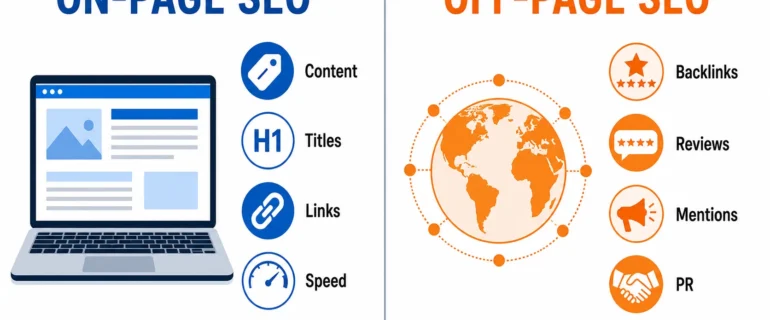
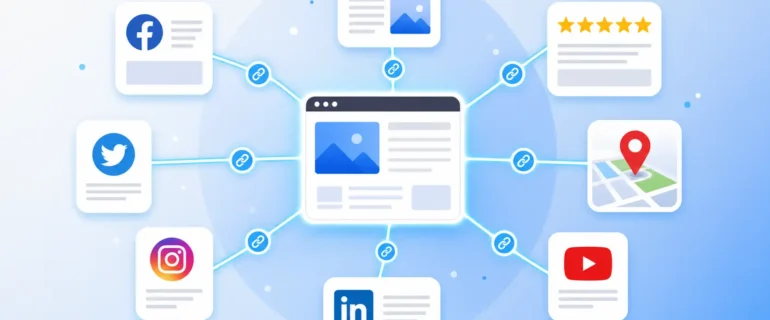
Off-page SEO refers to actions taken outside your website that influence how search engines evaluate its authority, relevance, and trustworthiness. While on-page work focuses on what’s inside your control (your content, code, and structure), off-page SEO is about how the rest of the internet vouches for you.
Think of it like a job reference. You can write the best resume in the world, but if nobody outside your company can confirm your track record, hiring managers hesitate. Search engines work the same way. They want to see other credible sources confirming that your site deserves to rank, through links, mentions, reviews, and genuine engagement. At LocalPro1, this is the first concept we walk new clients through, since misunderstanding it usually explains why a technically solid site still isn’t ranking.
On-Page SEO vs. Off-Page SEO vs. Technical SEO
A lot of business owners lump all three together, then wonder why their strategy feels scattered. Here’s how they actually differ:
Factor | On-Page SEO | Off-Page SEO | Technical SEO |
Where it happens | Directly on your webpages | Outside your website | Behind the scenes (code, servers, structure) |
What it controls | Content, keywords, headers, internal links | Backlinks, brand mentions, reviews, citations | Site speed, crawlability, indexing, security |
Level of control | Full control | Limited/influenced control | Full control |
Example task | Rewriting a title tag | Earning a link from an industry blog | Fixing a broken sitemap |
The takeaway: on-page and technical SEO get your house in order. Off-page SEO gets the neighborhood talking about your house. You need all three, but off-page SEO is usually the one businesses neglect longest, mainly because it takes patience and relationship-building rather than a quick fix.
Why Off-Page SEO Still Matters in 2026
Some business owners assume off-page SEO lost relevance once Google started emphasizing content quality. That’s a misunderstanding of how ranking systems actually work.
Trust, Authority, and E-E-A-T Signals
Google’s Quality Rater Guidelines put heavy weight on what other credible sources say about you, not just what you say about yourself. This is the foundation of E-E-A-T (Experience, Expertise, Authoritativeness, Trustworthiness). A site can claim expertise all day long, but if no reputable publication, forum thread, or industry directory backs that claim up, it carries less weight. We’ve seen local service businesses jump several ranking positions after earning just three or four mentions on niche, relevant sites, not because the links were high-volume, but because they were contextually trustworthy.
Its Growing Role in AI Overviews and LLM-Driven Search
Here’s something most guides on this topic still overlook: AI-driven search results (Google’s AI Overviews, and answers generated by large language models) tend to pull from sources that are already well-cited across the web. If your brand rarely appears outside your own domain, AI systems have fewer signals to trust you as a source. Off-page SEO techniques like earning citations on authoritative resource pages directly feed into whether your business gets surfaced in these AI-generated answers, not just traditional blue links.
Core Off-Page SEO Ranking Factors
Not every external signal carries equal weight. Understanding which ones matter helps you prioritize effort correctly.
Backlink Quality and Relevance
A single link from a topically relevant, well-trusted site will consistently outperform dozens of links from unrelated, low-authority domains. Relevance matters more than raw quantity. A plumbing company earning a link from a home renovation blog will see more benefit than the same company getting a link from an unrelated tech forum.
Referring Domains vs. Referring IPs
Search engines look at how many unique domains link to you, not just the total number of backlinks. Ten links from ten different, credible websites carry more weight than fifty links from the same site. Referring IPs matter too, since a cluster of links from the same server can sometimes signal a private link network, which search engines are increasingly good at spotting.
Brand Mentions (Linked and Unlinked)
Not every mention of your business needs a hyperlink to help you. When your brand name gets referenced in an article, podcast show notes, or industry roundup, even without a clickable link, it still contributes to how search engines and AI models perceive your credibility. This is one of the more underrated off page seo tactics available to smaller businesses that can’t always secure a direct link.
Anchor Text
The clickable text used in a link gives search engines context about the linked page. Natural, varied anchor text (a mix of your brand name, the page topic, and generic phrases like “learn more”) looks organic. Overusing exact-match keyword anchors repeatedly is one of the fastest ways to trigger scrutiny under recent spam-related updates.
Off-Page SEO Techniques That Actually Work
This is where strategy turns into execution. Below are off page seo techniques that consistently deliver results when done with care, not shortcuts.
Link Building (Broken Link Building, Resource Page Outreach, Digital PR)
Broken link building involves finding dead links on relevant websites and offering your own working content as a replacement. It’s a win for the site owner (they fix a broken link) and a win for you (you earn a relevant backlink). Resource page outreach works similarly: many industry sites maintain curated lists of helpful tools or guides, and a well-placed pitch can land you a spot. Digital PR, meanwhile, means creating something newsworthy (original research, a unique local dataset, a genuinely useful tool) and pitching it to journalists or industry writers.
Guest Posting Done the Right Way
Guest posting still works, but only when the intent is providing real value to a new audience, not just planting a link. The difference is obvious to both readers and search engines. A guest post packed with genuine insight, written for a site your audience actually reads, earns trust. A guest post stuffed onto a low-quality site purely for a backlink does the opposite and can actively hurt you.
Content Marketing and Original Research
Publishing original data, whether it’s a small local survey, a case study from your own client work, or a unique analysis, gives other sites a reason to cite you. This is one of the most durable off page seo strategies because it earns links passively over time, rather than requiring constant outreach.
Social Media and Influencer Collaboration
Social shares themselves aren’t a direct ranking factor, but the visibility they create leads to more people discovering, linking to, and mentioning your content. Partnering with a relevant local influencer or industry voice can introduce your brand to an audience that would never have found you through search alone.
Podcast Guesting and Interviews
Being interviewed on a podcast or industry publication does double duty: it usually earns a link back to your site, and it puts your name and expertise in front of a new, engaged audience. Even a modest, niche podcast with a loyal listener base can send meaningful referral traffic and long-term brand recognition your way.
Forum and Community Engagement
Genuinely participating in industry-specific forums or Q&A communities, answering real questions with useful advice, builds recognition over time. This isn’t about dropping links everywhere. It’s about becoming a known, credible voice in spaces where your potential customers already spend time.
If you’re managing off page seo strategies at scale, especially for a competitive local market, working with our Link Building Services in New York can save you the trial-and-error most businesses go through on their own.
Local Off-Page SEO
For businesses serving a specific city or region, off-page SEO takes on a few extra layers.
Business Profile Optimization
Your Google Business Profile is one of the highest-leverage off-page assets you have. Filling it out completely, choosing the correct category, and posting updates regularly all feed into how you show up in local map results.
NAP Consistency
Your Name, Address, and Phone number need to match exactly across every directory, citation, and listing. Inconsistent NAP data confuses search engines about which information is accurate, and that confusion can quietly suppress your local rankings even when everything else looks fine.
Review Generation and Response Strategy
Reviews function as a trust signal both to search engines and to the humans reading them before they call you. A steady stream of genuine reviews, paired with thoughtful responses (including to negative ones), demonstrates an active, trustworthy business. Avoid the temptation to purchase reviews. It’s against platform rules and it’s easy for both users and algorithms to detect.
Off-Page SEO and E-E-A-T
Building Experience and Expertise Signals Externally
E-E-A-T isn’t something you can fully build on your own site. It requires the outside world to validate your claims. Sharing case studies with real numbers, having your team members interviewed as subject matter experts, and contributing to respected industry publications all build this externally.
Getting Cited by Authoritative, Relevant Sources
The goal isn’t to get cited anywhere possible. It’s to get cited by sources that are actually relevant to your industry and trusted by your audience. A single mention on a respected regional news site can do more for your credibility than twenty mentions on generic content mills.
Off-Page SEO Mistakes That Can Trigger a Google Penalty
Buying Links or Participating in Link Schemes
Purchasing links, joining private blog networks, or trading links in bulk violates Google’s guidelines directly. These patterns are easier to detect today than they were even a few years ago, and the risk of a manual action or ranking drop far outweighs any short-term gain.
Spammy Guest Posting Networks
Mass guest posting through automated outreach services that place the same generic article across dozens of unrelated sites is a red flag search engines actively watch for, especially following recent spam policy updates focused on scaled content abuse.
Fake Reviews
Fabricated or incentivized reviews might offer a short-term boost, but platforms are actively cracking down on this practice, and getting caught can mean having your reviews wiped entirely, along with a serious hit to consumer trust.
How to Measure Off-Page SEO Success
Tracking the right metrics keeps your efforts grounded in results rather than guesswork.
- Referring domains growth: Track how many unique, credible domains link to you month over month, not just total backlink count.
- Branded search volume: An increase in people searching your business name directly often signals that your off-page visibility efforts (PR, podcasts, mentions) are working.
- Brand mention sentiment and reach: Monitoring where and how your brand gets discussed helps you understand whether your reputation-building efforts are landing the way you intended.
Key Takeaways
Off-page SEO isn’t a checklist you complete once. It’s an ongoing effort to build genuine trust and visibility outside your own website, through quality backlinks, honest brand mentions, strong local citations, and real engagement with your industry. The businesses that treat it as a long-term reputation strategy, rather than a quick trick, are the ones still ranking well years later.
If you’d rather have an experienced team handle this for you, contact us at LocalPro1 and we’ll walk you through exactly what your off-page SEO strategy should look like for your specific market.
FAQs
Is off-page SEO still important in 2026?
Yes, arguably more than ever. As AI-driven search results pull from sources with strong external validation, off-page signals like citations and brand mentions play a growing role in whether your business gets surfaced in these newer search experiences.
Do social signals affect rankings?
Social shares aren’t a confirmed direct ranking factor, but they increase visibility, which often leads to more organic links and mentions down the line. Treat social media as a discovery channel that supports your broader off page seo strategies, not a ranking shortcut.
How long does off-page SEO take to show results?
Most businesses start seeing measurable movement within three to six months, though this depends heavily on your industry’s competitiveness and how consistently you’re earning quality links and mentions. Off-page SEO rewards patience over quick fixes.
What’s the difference between off-page SEO techniques and off-page seo tricks?
Legitimate off-page seo techniques focus on earning trust through relevant links, mentions, and reputation-building over time. Anything marketed as a quick “trick,” like bulk link purchases or fake engagement, usually violates search engine guidelines and puts your site at risk.
Can a small local business compete using off-page SEO?
Absolutely. Local businesses often have an advantage here because hyper-relevant local citations, community involvement, and genuine local press coverage carry significant weight, sometimes more than a handful of generic national links would.