


- Your cart is empty Browse Shop
What Is Off-Page SEO? A Complete Guide (2026)
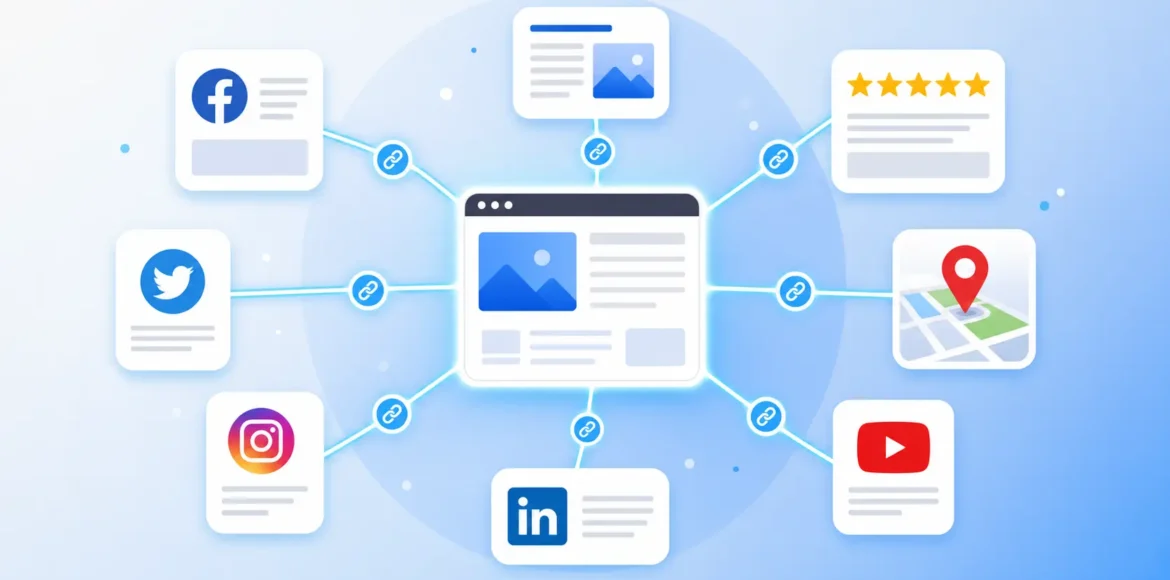
Two businesses can publish nearly identical content, target the same keywords, and still land on completely different pages of Google. The difference is rarely the writing quality. It’s what’s happening outside the website. That’s what is off page seo, and it’s the piece most business owners underestimate until their rankings stall despite a technically clean site.
At LocalPro1, this is usually the first gap we find when a client’s on-page work looks solid but traffic won’t move.
What Is Off Page SEO? (Simple Definition)

Off-page SEO is every action taken away from your own website that influences how search engines judge its authority and trustworthiness. Backlinks, brand mentions, reviews, and citations all fall under this umbrella. It’s the internet vouching for you instead of you talking about yourself.
On-Page SEO vs. Off-Page SEO vs. Technical SEO
A lot of business owners lump all three together, then wonder why their strategy feels scattered. Here’s how they actually differ:
Factor | On-Page SEO | Off-Page SEO | Technical SEO |
Where it happens | Directly on your webpages | Outside your website | Behind the scenes (code, servers, structure) |
What it controls | Content, keywords, headers, internal links | Backlinks, brand mentions, reviews, citations | Site speed, crawlability, indexing, security |
Level of control | Full control | Limited/influenced control | Full control |
Example task | Rewriting a title tag | Earning a link from an industry blog | Fixing a broken sitemap |
The takeaway: on-page and technical SEO get your house in order. Off-page SEO gets the neighborhood talking about your house. You need all three, but off-page SEO is usually the one businesses neglect longest, mainly because it takes patience and relationship-building rather than a quick fix.
Common Off-Page SEO Myths (Debunked)
“Off-Page SEO Is Just Link Building”
Links matter, but unlinked brand mentions, review sentiment, and social proof all feed into the same trust signals. Treating off-page work as a links-only exercise leaves real ranking opportunities on the table.
“More Links Always Means Higher Rankings”
Volume without relevance does little. Ten links from topically connected, moderately trusted sites consistently outperform fifty links from unrelated domains, especially under current spam detection systems.
Why Off-Page SEO Still Matters in 2026
Trust, Authority, and E-E-A-T Signals
Google’s Quality Rater Guidelines weigh what other credible sources say about a business more heavily than what the business says about itself. A handful of mentions on niche, relevant sites can move rankings more than a large batch of generic ones.
Why It Matters More for YMYL (Your Money or Your Life) Topics
Sites covering health, finance, legal, or safety topics face stricter scrutiny because inaccurate information carries real consequences. For YMYL pages, external validation such as expert citations and authoritative mentions carries extra weight in how trustworthy the content is judged to be.
Its Growing Role in AI Overviews and LLM-Driven Search
AI-generated answers tend to pull from sources already well-cited across the web. If a brand rarely appears outside its own domain, AI systems have fewer signals to treat it as a reliable source, regardless of how good the on-site content is.
Branded Search as a Trust Signal
When people search your business name directly instead of a generic term, it tells search engines your off-page visibility work, PR, podcasts, mentions, is registering with real users. This is one of the more overlooked off page seo tactics available to smaller, local businesses.
Core Off-Page SEO Ranking Factors
Backlink Quality and Relevance
One link from a topically relevant, trusted site outperforms dozens from unrelated domains. A roofing company earning a link from a home improvement publication carries far more weight than the same link from an unrelated finance blog.
Referring Domains vs. Referring IPs
Search engines weigh how many unique domains link to you, not the raw backlink count. Clusters of links coming from the same server can look like a manufactured link network, which modern spam systems flag quickly.
Brand Mentions (Linked and Unlinked)
A mention in an article or podcast show notes, even without a clickable link, still contributes to how both search engines and AI systems perceive credibility. This is one of the most underrated off page seo techniques for businesses that can’t always secure a direct link.
Anchor Text
Natural, varied anchor text, mixing brand name, topic phrases, and generic terms, reads as organic. Repeated exact-match keyword anchors is one of the faster ways to draw scrutiny under recent spam-related updates.
Directory and Citation Listings
A citation is any online listing of your business name, address, and phone number, typically on directories, review platforms, or industry-specific listing sites. These reinforce legitimacy even when they carry no direct link value.
Off-Page SEO by Business Type
Business Type | Primary Off-Page Priority | Secondary Priority |
Local Service | Google Business Profile, reviews, NAP consistency | Local press mentions |
E-commerce | Product review syndication, affiliate mentions | Digital PR, influencer collaboration |
SaaS | Industry publication citations, comparison site listings | Podcast guesting |
Content & Media | Original research, journalist citations | Social distribution |
Off-Page SEO Techniques That Actually Work
Link Building (Broken Link Building, Resource Page Outreach, Digital PR)
Broken link building means finding dead links on relevant sites and offering your content as the replacement. Resource page outreach targets curated lists of helpful tools or guides. Digital PR means creating something genuinely newsworthy, original research or a useful local tool, and pitching it directly to writers.
Guest Posting Done the Right Way
Guest posting still works when the intent is delivering real value to a new audience rather than simply planting a link. A well-written post on a site your audience actually reads earns trust; a generic post placed purely for a backlink does the opposite.
Content Marketing and Original Research
Publishing original data, even a small local survey or a case study from real client work, gives other sites a genuine reason to cite you. This is one of the more durable off page seo strategies because it earns links passively over time.
Social Media and Influencer Collaboration
Shares aren’t a direct ranking factor, but the visibility they generate leads to more discovery, linking, and mentions. Partnering with a relevant niche influencer can introduce a brand to an audience search alone would never reach.
Podcast Guesting and Interviews
Podcast appearances typically earn a link back and put expertise in front of an engaged, niche audience, often producing more meaningful referral traffic than a single blog mention.
Forum and Community Engagement
Genuinely answering questions in industry forums or Q&A communities builds recognition over time. This isn’t about dropping links everywhere; it’s about becoming a known voice where potential customers already spend time.
Earning Mentions on Authoritative News and Reference Sites
A single mention on a respected regional publication or industry reference resource often does more for credibility than twenty mentions on low-quality content mills. Businesses managing off page seo tactics at scale, particularly in competitive local markets, often benefit from working with a dedicated team; our Link Building Services in New York handle this outreach process end to end.
Local Off-Page SEO
Business Profile Optimization
A complete, accurately categorized Google Business Profile with regular updates is one of the highest-leverage off-page assets available, directly affecting visibility in local map results.
NAP Consistency
Name, address, and phone number need to match exactly across every directory and listing. Inconsistent data confuses search engines and can quietly suppress local rankings even when everything else looks fine.
Review Generation and Response Strategy
A steady flow of genuine reviews, paired with thoughtful responses to both positive and negative feedback, signals an active, trustworthy business. Purchased reviews violate platform rules and are increasingly easy for algorithms to detect.
Off-Page SEO and E-E-A-T
Building Experience and Expertise Signals Externally
E-E-A-T can’t be fully built on-site alone. Sharing case studies with real numbers, having team members interviewed as subject matter experts, and contributing to respected industry publications all validate expertise from outside sources.
Getting Cited by Authoritative, Relevant Sources
The goal isn’t volume of citations, it’s relevance. A mention from a trusted, industry-specific source carries more weight than a scattershot of low-relevance links.
Google's 2025-2026 Spam Policy Updates and What They Mean for Off-Page SEO
Site Reputation Abuse (Parasite SEO)
Publishing low-value content on a trusted third-party domain purely to exploit its authority is now treated as a manual action risk. Off-page work built on borrowed authority rather than earned trust is increasingly fragile.
Scaled Content Abuse and Mass-Produced Guest Posts
Automated outreach services placing the same generic article across dozens of unrelated sites are actively targeted. This is exactly why guest posting needs genuine relevance rather than volume.
Expired Domain Abuse
Buying expired domains solely to redirect their existing authority to unrelated content is flagged as manipulative, not a legitimate off-page shortcut.
Buying Links or Participating in Link Schemes
Purchasing links or joining private blog networks violates guidelines directly, and detection has improved significantly in recent years. The risk of a ranking drop far outweighs any short-term gain.
Fake Reviews
Fabricated or incentivized reviews offer at best a short-term boost before platforms remove them entirely, often alongside a lasting trust penalty.
Setting Off-Page SEO Goals (SMART Framework)
Vague goals like “get more backlinks” rarely produce results. A SMART goal looks more like: earn eight relevant, topical links and four unlinked brand mentions within a quarter through targeted outreach and one original piece of research. Specific, measurable targets make it possible to track whether off page seo tricks are being avoided in favor of tactics that actually compound.
Your 90-Day Off-Page SEO Action Plan
Month 1: Audit and Foundation
Audit existing backlinks, citations, and NAP consistency. Identify quick wins like broken links pointing to competitors or incomplete directory listings.
Month 2: Outreach and Content
Launch outreach for guest posts, resource page placements, and one original data piece worth citing. Begin podcast or interview pitching.
Month 3: Scale and Local Signals
Expand successful outreach channels, refine review generation processes, and formalize a monthly cadence for Google Business Profile updates and content distribution.
How to Audit a Competitor's Off-Page SEO (Step-by-Step)
Start by identifying which domains link to a top-ranking competitor but not to you. Cross-reference those with your own industry relevance to prioritize outreach targets. Next, check where their brand gets mentioned without a link, since those sources often accept guest content or citations more easily than cold outreach elsewhere. Finally, review their local citations and profile completeness if they compete in the same geographic market.
How to Measure Off-Page SEO Success
Track referring domain growth month over month rather than raw backlink counts. Monitor branded search volume as a proxy for whether PR and mention-building efforts are landing. Watch brand mention sentiment to catch reputation issues early, before they affect conversions.
Key Takeaways
Off-page SEO isn’t a one-time checklist. It’s ongoing work to build genuine trust through quality backlinks, honest mentions, consistent local citations, and real industry engagement. Businesses that treat these off page seo strategies as a long-term reputation investment, rather than a shortcut, are the ones still ranking years later.
If you’d rather have an experienced team build this out for you, contact us at LocalPro1 and we’ll map out exactly what your off page seo strategy should look like for your market.
FAQs
Is off-page SEO still important in 2026?
Yes. As AI-driven search results increasingly pull from sources with strong external validation, off-page signals play a growing role in whether a business gets surfaced in these newer search experiences.
Do social signals affect rankings?
Social shares aren’t a confirmed direct ranking factor, but they increase visibility, which often leads to more organic links and mentions over time.
How long does off-page SEO take to show results?
Most businesses see measurable movement within three to six months, depending on industry competitiveness and consistency of outreach. Off-page SEO rewards patience over quick fixes.
What’s the difference between off page seo techniques and off page seo tricks?
Legitimate techniques focus on earning trust through relevant links and reputation-building over time. Anything marketed as a quick trick, like bulk link purchases, typically violates search engine guidelines.
Can a small local business compete using off-page SEO?
Absolutely. Local businesses often have an advantage here since hyper-relevant citations, community involvement, and genuine local press coverage carry significant weight.
