



- Your cart is empty Browse Shop
How to Improve Local SEO: 9 Proven Steps to Rank Higher in Local Search (2026 Guide)
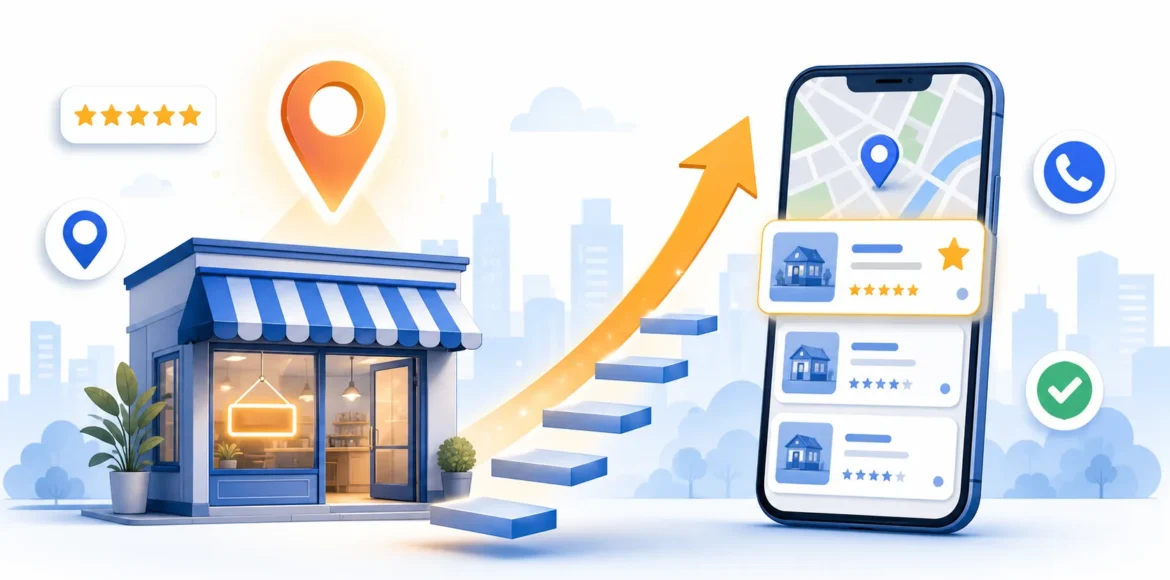
Picture someone standing on a street corner at 6 p.m., typing “emergency electrician near me.” They will call whichever business looks most trustworthy in the first few results, and they won’t scroll. If you want to be that business, you need to know how to improve local SEO in a way that Google trusts.
Quick answer: Start with a complete and honest Google Business Profile. Keep your business details identical everywhere online. Ask real customers for reviews. Build website pages around the areas you truly serve. Earn mentions from organizations in your community. Do all of this without shortcuts, because spam enforcement is getting stricter.
Many guides still recommend tactics that now put rankings at risk. At LocalPro1, we focus on policy-safe work. This guide gives you nine steps in priority order and a 30-day plan to put them into action.
Key Takeaways
- Your Google Business Profile has the biggest influence on map visibility.
- Reviews affect both rankings and whether people contact you.
- Location pages must contain real, distinct information.
- Shortcuts like fake reviews and bought links can backfire.
- Measure calls and direction requests, not just rankings.
What Is Local SEO and How Does Google Rank Local Results?

Local SEO is the practice of making your business easier to find when people search for products or services near them. It covers your map listing, your website, your reviews and the signals that confirm you are a real business in a real place.
Google describes three ranking factors for local results:
- Relevance: how well your profile matches the search.
- Distance: how close you are to the searcher or the location they named.
- Prominence: how well known and trusted you appear, based on reviews, links and mentions.
You cannot change distance, so the other two deserve your effort.
| Result type | Where it appears | What drives it |
| Local pack | Top three map listings | Profile quality, reviews, proximity |
| Map results | Expanded map view | Same signals, more listings |
| Organic results | Standard blue links | Website content, links, page experience |
Start With a Quick Local SEO Audit
Before changing anything, record where you stand. Check five things: whether your profile details are correct, whether your name, address and phone number match across the web, how many reviews you have and how recent they are, how your website feels on a phone, and where you appear for your three most valuable searches.
Save screenshots and numbers. Without a baseline, you cannot tell which changes worked. If you would rather have specialists handle this stage, our Local SEO Services in New York start with exactly this kind of audit.
Optimize Your Google Business Profile for Maximum Visibility
LocalPro1 advises treating this profile as your digital storefront, because for many searchers it is the first and only thing they see. This is the core of Google Business Profile optimization.
- Claim and verify the listing so you control it.
- Pick the most accurate primary category. This is one of the strongest relevance signals, so choose the service customers pay you for, not a broad label.
- Use your real business name. Adding keywords or locations to the name violates Google’s guidelines and invites suspensions.
- Fill every field: hours, services, attributes, description and products.
- Add genuine photos of your work, team and premises, and post updates regularly.
A practical example: a roofing contractor who lists “emergency leak repair” and “roof inspection” as separate services gives Google clearer matching information than one who writes “roofing” and stops.
Earn and Manage Customer Reviews the Right Way
Reviews do double duty. They support your prominence, and they persuade people choosing between three similar listings. Make asking easy. Send a short text or email within a day of finishing a job, print a QR code on invoices or receipts, and ask in person when a customer expresses thanks. You can suggest customers mention what service they received, but never script their words.
Respond to every review. A positive reply can be as simple as: “Thank you, Maria. We enjoyed working in your kitchen and appreciate you sharing this.” For a negative review, stay calm: “We’re sorry the visit fell short. Please contact us at [number] so we can make it right.” Avoid fake reviews, review gating (only asking happy customers), incentives in exchange for reviews, and review swaps between businesses. These are the patterns automated systems are built to catch.
Build Local Relevance on Your Website
Your website should confirm what your profile claims. Start with local keyword research by combining your service with the city or neighborhood, such as “dentist in Astoria” or “AC repair Brooklyn.” Place these naturally in title tags, headings, URLs and body text.
Add LocalBusiness schema markup, an embedded map and your contact details in plain text. These help search engines read your location data accurately. Many owners ask how to improve local SEO beyond the basics, and unique location pages are often the answer, as long as they are done properly.
How to Structure Location Pages That Don’t Look Like Spam
Doorway pages, which are near-identical pages with only the city name swapped, are a known spam pattern. Instead, give each page its own substance:
- Local team members or the specific branch address
- Real projects completed in that area, with photos
- Testimonials from customers there
- Directions, parking notes and area-specific FAQs
Create one page per real location or genuinely distinct service area. If you cannot write something useful and different for a town, do not build a page for it.
Create Local Content That People Actually Engage With
Local content works when it answers real questions from your area. A heating company might explain how older buildings in your city handle winter boilers. A salon might publish a guide to hair care in humid summers.
Add first-hand evidence: photos from your jobs, quotes from your technicians and details only someone with experience would know. This supports E-E-A-T and gives readers a reason to stay. Keep everything human-edited and genuinely useful.
Keep Your Citations and Business Information Consistent
Local citations are mentions of your business name, address and phone number on other websites. NAP consistency still matters because mismatched details create doubt about which information is correct.
Prioritize the major data aggregators, directories relevant to your industry and respected local directories. Fix duplicate listings and outdated addresses first, since those cause the most confusion. Avoid mass directory submissions on low-quality sites, which add little value and can look manipulative.
Earn Local Backlinks Without Risky Tactics
Local backlinks signal that your community recognizes you. Safe sources include sponsorships of local teams or events, partnerships with nearby non-competing businesses, supplier and partner pages, local news coverage, and genuinely useful resources such as a neighborhood guide.
Avoid paid links, large-scale link exchanges, expired-domain tricks and private blog networks. Google’s guidance also notes that when systems reassess a site after a spam update, improvement can take time, so earn links steadily.
Improve Mobile Experience, Speed and Click-to-Action
Most local searches happen on phones, so test your site on one. Pages should load quickly, text should be readable without zooming, and the main action should be obvious. Add click-to-call, tap-for-directions and booking buttons near the top. Skip intrusive pop-ups and heavy ads that block content, since they frustrate visitors and weaken page experience.
How to Stay Safe From Google’s Spam Updates
Google has released several spam updates in 2026, including the September update that began rolling out on September 24 and applies globally. Google has not said it targets one specific tactic, so the safest approach is compliance across the board.
| Risky tactic | Safe alternative |
| Keywords added to the profile name | Use your real business name |
| Fake or purchased reviews | A consistent, honest review request process |
| Near-duplicate city pages | Unique pages with local detail |
| Paid or swapped links | Local partnerships and sponsorships |
| Mass AI-written content | Human-edited content with real experience |
Quick compliance check: Is your name legitimate? Are your reviews real? Does each page offer unique value? Could you explain every link you earned?
If rankings move during a rollout, do not panic and rewrite everything. Monitor for a couple of weeks, then fix genuine policy issues.
How to Track and Measure Local SEO Results
Rankings alone can mislead. Track calls from your profile, direction requests, local pack visibility, organic visits from local queries, review count and rating, and actual enquiries or sales.
Free tools cover most needs: your profile’s built-in insights, Google Search Console and a rank tracker with a local grid view. Set a monthly routine, compare against your baseline and note which changes preceded improvements.
30-Day Local SEO Action Plan
| Week | Focus |
| Week 1 | Audit and Google Business Profile fixes |
| Week 2 | Review request system and citation cleanup |
| Week 3 | On-page updates and one local content piece |
| Week 4 | Local link outreach and tracking setup |
Final Thoughts
If you remember three things about how to improve local SEO, make them these: build a complete Google Business Profile, earn genuine reviews, and create website pages with real local value. Keep every tactic transparent, and spam updates become less of a threat.
If you want expert help putting this plan to work, contact us at LocalPro1 for a free local SEO audit.
Frequently Asked Questions
How long does it take to improve local SEO?
Profile and citation fixes can show movement within weeks, while reviews, content and links usually take three to six months to compound. Competitive cities and industries take longer, so measure progress against your own baseline.
Do I need a website to rank locally?
You can appear in map results with only a Google Business Profile. A website still strengthens relevance and trust, and it lets you compete in organic results as well.
How many reviews do I need?
There is no fixed number. Aim to match or modestly exceed the leading local competitors, and prioritize steady, recent, authentic reviews over a sudden burst.
Does local SEO work for service-area businesses?
Yes. Hide your home address if you do not serve customers there, list the areas you cover, and build useful pages for the areas you genuinely serve.
Can a spam update affect my Google Business Profile?
Spam updates mainly affect web search rankings, but the same violations, such as fake reviews or keyword-stuffed names, can also trigger profile suspensions. Staying compliant protects both.
