




- Your cart is empty Browse Shop
What Is PPC Management: What It Includes, and How to Do It Successfully
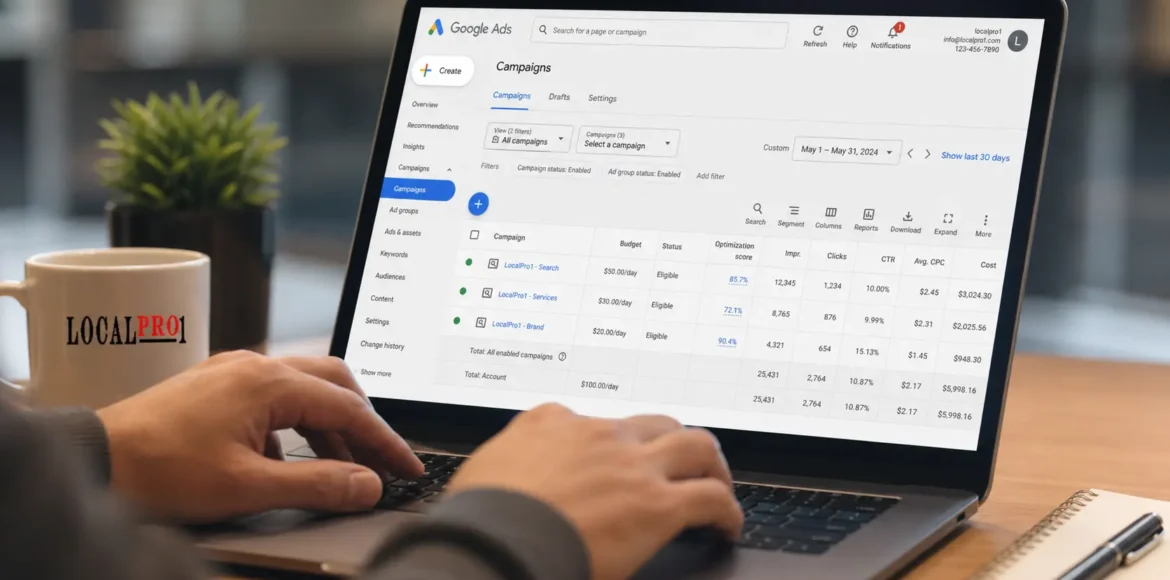
Most businesses lose money on pay-per-click ads before they ever see a return. A campaign launches with default settings, nobody checks it for weeks, and by the time someone reviews the numbers, the budget is gone and the leads never show up. That gap between running ads and actually managing them is where most wasted spend happens.
So what is PPC management? It’s the ongoing process of planning, building, monitoring, and adjusting paid campaigns so every dollar moves toward a real business result, not just a click. At LocalPro1, we’ve seen this distinction separate profitable campaigns from ones that quietly drain the budget.
What You’ll Learn in This Guide
This article walks through the full picture of PPC management: the definition, the core components, the actual weekly workflow behind a well-run account, bidding strategy options, common mistakes, and how to tell a strong PPC partner from a mediocre one. Jump to any section using the headings below, or read straight through for the complete picture.
Quick Facts About PPC Management
- PPC management covers strategy, setup, daily monitoring, and ongoing optimization of paid ad accounts
- It spans multiple platforms, not just one search engine
- A typical account needs weekly attention, not a “set and forget” approach
- Costs usually combine ad spend with a separate management fee
- Poor management is the leading cause of wasted ad budget, more than the platform itself
What Is PPC Management? (Definition)
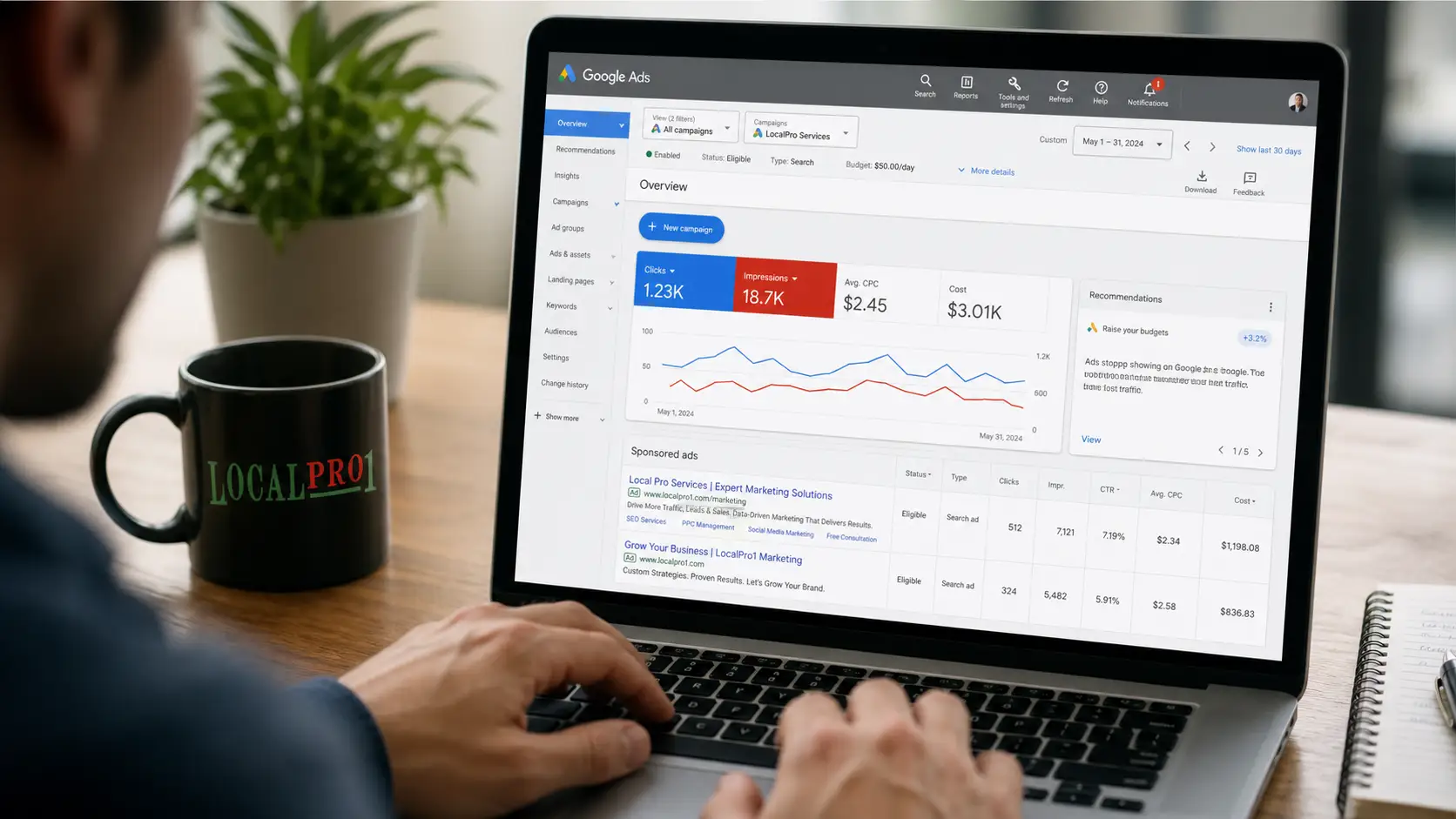
PPC management is the practice of overseeing a pay-per-click advertising account from the ground up: choosing keywords, writing ads, setting bids, allocating budget, and continuously refining all of it based on real performance data. It’s not a one-time setup task. A PPC account is closer to a living system that reacts to competitor behavior, seasonality, and platform algorithm changes, so it needs a person actively steering it.
Here’s a real pattern we see often: two businesses launch nearly identical campaigns with the same budget. One owner checks in once a month. The other reviews search term reports weekly, trims wasted spend, and adjusts bids based on what’s converting. Six months later, the second account is generating leads at half the cost per acquisition. Same platform, same budget, completely different outcome, because one was managed and the other was just left running.
PPC Management vs. Running Ads Yourself: What’s the Difference
Running ads yourself usually means launching a campaign and checking back occasionally. PPC management means treating the account as an evolving project: reviewing search terms weekly, testing new ad variations, reallocating budget toward what’s working, and catching problems like rising cost-per-click before they drain the budget. The difference isn’t effort alone, it’s whether decisions are being made based on data or left on autopilot.
Why PPC Management Matters (ROI, Speed vs. SEO, Scalability)
Paid search offers something organic strategies can’t: speed. A well-managed PPC account can start generating qualified traffic within days, while SEO efforts often take months to gain traction. That speed becomes valuable during product launches, seasonal pushes, or when a business needs to fill a pipeline gap quickly.
But speed without management creates risk. Unmanaged campaigns tend to drift toward broad match keywords that pull in irrelevant clicks, or bidding wars that inflate cost per click without improving results. Active management protects against that drift and, when done well, allows a campaign to scale. A business that starts with a modest test budget can identify which keywords and audiences actually convert, then increase spend on those specific segments rather than scaling everything blindly.
What Does PPC Management Include (Core Components)
Keyword Research & Match Types
Good keyword research goes beyond finding high-volume terms. It means understanding search intent, choosing the right match type for each keyword group, and building a negative keyword list from day one to filter out searches that will never convert. A landscaping company bidding on “lawn care” without negative keywords, for example, will end up paying for clicks from people searching “lawn care jobs” or “lawn care equipment for sale,” neither of which represents a real customer.
Campaign & Account Structure
Account structure determines how efficiently a campaign can be optimized later. Grouping tightly related keywords into their own ad groups, rather than lumping everything into one broad group, allows ad copy to speak directly to what someone searched for. This tighter alignment tends to improve relevance scores and lowers the cost of each click over time.
Ad Copywriting & Creative Testing
Ad copy has to do two things at once: match what the searcher is looking for and give them a clear reason to click over a competitor. Testing multiple headline and description combinations isn’t optional if the goal is improvement. What performs in one industry rarely transfers directly to another, so ongoing testing within the specific account matters more than copying formulas from generic templates.
Bid Strategy & Budget Allocation
Bidding decisions directly affect both visibility and cost. Some campaigns need tight control over individual keyword bids, while others benefit from automated strategies once enough conversion data has accumulated. Budget allocation should follow performance, shifting spend toward campaigns and keywords that are actually converting rather than spreading it evenly across everything.
Landing Page Optimization
An ad can be flawless and still fail if it sends traffic to a slow, unclear, or mismatched landing page. The page content should directly reflect the ad’s promise, load quickly on mobile devices, and make the next step, whether that’s a call, a form, or a purchase, obvious within seconds.
Conversion Tracking & Reporting
Without accurate conversion tracking, every other decision in the account is a guess. Setting up proper tracking for calls, form fills, and purchases is the foundation that makes every optimization decision afterward meaningful rather than speculative.
How PPC Management Works (Step-by-Step Process)
A properly managed account typically follows this cycle: audit the current setup or market landscape, research keywords and audience segments, build the campaign structure, launch with a controlled initial budget, monitor performance closely in the first two to three weeks, then move into an ongoing optimization rhythm involving weekly search term reviews, bid adjustments, and monthly reporting against business goals. This isn’t a straight line. It’s a loop that repeats as the market, competitors, and platform features change.
PPC Platforms Overview
PPC management isn’t limited to a single search engine. It spans search advertising, shopping ads for ecommerce products, display advertising for visual reach across websites, social media advertising for audience targeting based on interests and behavior, and video advertising for engagement-driven campaigns. The right mix depends entirely on where a specific business’s customers actually spend their time and how they search before making a decision.
Practical Tips for PPC Management Success
1. Get Familiar with the Platform Before Scaling Spend
Every ad platform has quirks in how it interprets match types, applies automated bidding, and rolls out new features. Spending a small budget first to learn how a specific account behaves prevents costly mistakes once real money is on the line.
2. Do Deep Keyword & Negative Keyword Research
Negative keywords deserve as much attention as the keywords being bid on. Reviewing the search terms report weekly and adding irrelevant queries to the negative list is one of the fastest ways to cut wasted spend without touching the budget itself.
3. Analyze Competitor Ads and Positioning
Looking at what competitors are actually saying in their ad copy reveals gaps. If every competitor in a niche leads with price, an ad that leads with speed of service or guarantee terms can stand out simply by being different, not necessarily cheaper.
4. Choose the Right Bidding Strategy
The right bidding approach depends on the account’s goals and how much conversion data exists.
Target CPA
This strategy sets bids to try to get as many conversions as possible at or below a specific cost per acquisition, which works well once an account has enough historical conversion data to guide the algorithm.
Target ROAS
Target return on ad spend focuses on revenue rather than raw conversion count, making it a better fit for ecommerce accounts where order values vary significantly.
Maximize Conversions
This approach spends the full daily budget to get as many conversions as possible without a strict cost target, useful for accounts still gathering baseline data.
Maximize Conversion Value
Similar to Maximize Conversions but optimized toward total value rather than volume, this suits businesses where some conversions are worth significantly more than others.
Enhanced CPC
This blends manual bid control with automated adjustments based on the likelihood of conversion, offering a middle ground for accounts not yet ready for fully automated strategies.
5. Test Ad Creative and Landing Pages Continuously
Testing shouldn’t stop once a “winning” ad is found. Markets shift, competitors change their messaging, and audience fatigue sets in over time, so ongoing testing keeps performance from slowly declining.
6. Track the Right Metrics and Optimize Regularly
Click-through rate matters, but it’s not the finish line. Cost per acquisition, conversion rate, and actual return on ad spend tell the real story of whether a campaign is working for the business, not just generating clicks.
In-House vs. Agency vs. Freelancer: How to Choose
Managing PPC in-house offers direct control and deep product knowledge but requires ongoing time investment and staying current with frequent platform changes. Hiring a freelancer can work well for smaller, simpler accounts but may lack the bandwidth for larger, multi-platform campaigns. Working with a dedicated PPC management agency, such as LocalPro1, typically provides access to a full team, established processes, and cross-account pattern recognition that’s hard to replicate alone. The right choice usually comes down to account complexity, available internal time, and how quickly results are needed.
What a Good PPC Management Partner Should Be Responsible For
A capable partner should own the full picture: strategy development, campaign build-out, ongoing optimization, transparent reporting, and clear communication about what’s working and what isn’t. If reporting only shows clicks and impressions without connecting them to actual business outcomes, that’s a sign the account isn’t being managed toward real goals.
How to Evaluate a PPC Management Provider
Ask specifically how they structure accounts, how often they review performance, and how they’ve handled underperforming campaigns in the past. A provider who can walk through a real example of diagnosing and fixing a struggling account demonstrates far more than one who only talks in general promises.
Do Small Businesses Need PPC Management Services?
Small businesses often assume PPC management only pays off once you’re spending at scale, but it’s usually the reverse. Smaller budgets leave far less room to absorb wasted spend, which is exactly why careful management matters more, not less, at this level. Take a local service business running $1,500 a month: without solid negative keywords or proper conversion tracking in place, that budget can get eaten up by unqualified clicks just as fast as it would for a much larger enterprise account.
How Much Does PPC Management Cost?
Costs generally combine two pieces: the actual ad spend paid to the platform and a separate management fee, which may be a flat monthly rate, a percentage of ad spend, or a hybrid structure. Pricing varies based on account complexity, number of campaigns, and the level of hands-on optimization required. For businesses in this region exploring options, PPC Management Services in NY can provide a clearer, localized starting point for budget expectations.
Common PPC Management Mistakes to Avoid
The most frequent mistakes include ignoring the search terms report, using broad match without negative keywords, letting campaigns run untouched for weeks, focusing only on click-through rate instead of actual conversions, and sending traffic to a generic homepage instead of a page built for that specific ad. Each of these individually seems minor, but together they’re responsible for the majority of underperforming accounts.
What Makes a Good PPC Campaign?
A strong PPC campaign aligns tightly targeted keywords, ad copy that speaks directly to searcher intent, a landing page built for conversion, and a bidding strategy matched to the account’s actual goals. None of these pieces work well in isolation. A campaign only performs when every element is pointed in the same direction.
Conclusion
PPC management isn’t a one-time project, it’s a continuous discipline, and that discipline is exactly what separates accounts that fuel real business growth from accounts that quietly burn through budget. The advertisers who actually see returns are the ones who treat their campaigns as something to consistently monitor, test, and adjust, not something they launch once and walk away from.
If you’re still deciding between managing this in-house or bringing in outside support, the team at LocalPro1 can walk you through your specific situation and show you what a properly managed account would look like for your business. Contact us to discuss your goals and figure out the right starting point.
Frequently Asked Questions
What is PPC management in simple terms?
PPC management is the ongoing process of building, monitoring, and improving pay-per-click ad campaigns so they perform better over time rather than staying static after launch.
How often should a PPC account be reviewed?
Most accounts benefit from at least a weekly review of search terms and performance data, with deeper strategic adjustments made monthly based on longer-term trends.
Is PPC management different from SEO?
Yes. PPC management focuses on paid traffic that appears immediately once budget is spent, while SEO builds organic visibility over time without a direct cost per click.
Can a small business handle PPC management without an agency?
It’s possible, especially for simple, single-platform campaigns, but it requires consistent weekly time investment and a willingness to learn platform-specific bidding and tracking tools.
What’s the biggest sign that a PPC account needs better management?
Rising costs with flat or declining conversions is usually the clearest sign, since it means the account is spending more without producing proportionally more results.
